


In the hills of Uttarakhand, festivals are not just dates on a calendar. They follow the rhythm of the land. Among them, Harela stands out as a quiet yet deeply meaningful celebration, one that marks the arrival of monsoon, the beginning of the agricultural season, and the renewal of life.
Harela is primarily celebrated in the Kumaon region and parts of Garhwal. Unlike large temple gatherings or pilgrimage fairs, it unfolds inside homes and courtyards. It is simple. It is seasonal. And it carries centuries of ecological wisdom.
Just as greenery is celebrated during Harela, spring blossoms are honoured during the Phool Dei festival of Uttarakhand, where children welcome prosperity with flowers.
What Does Harela Mean?
The word Harela comes from “Hariyali,” meaning greenery. It literally translates to “Day of Green.” The name itself reflects its purpose, welcoming the monsoon and praying for a prosperous farming year.
In a mountainous state where agriculture depends heavily on rainfall, the monsoon is not just a season. It is survival. Harela acknowledges this dependence with gratitude. Just as greenery is celebrated during Harela, spring blossoms are honoured during the Phool Dei festival of Uttarakhand, where children welcome prosperity with flowers.
The Ritual: Sowing Seeds of Hope
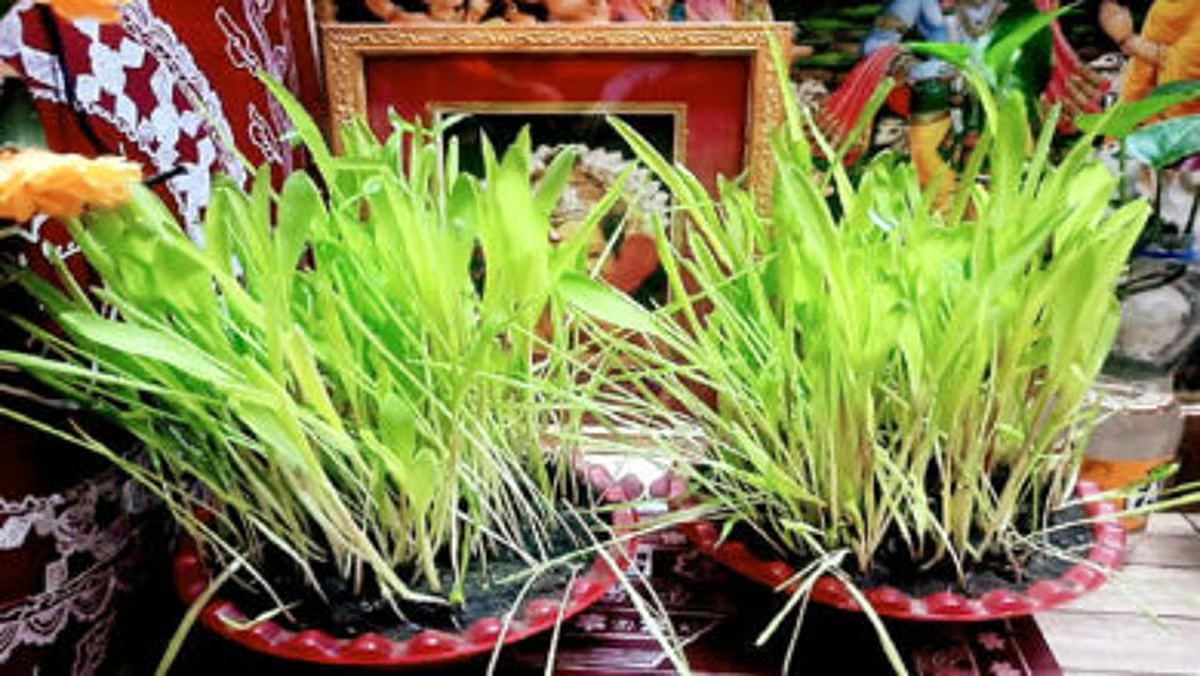
The preparations begin ten days before the main festival day. Families sow seeds of wheat, barley, maize, mustard, or pulses in small bamboo baskets (daali), leaf containers, or earthen pots. These are kept inside the house and watered daily.
Over the next ten days, the seeds sprout into tender green shoots. On the tenth day, the day of Harela, these shoots are ceremonially cut. Elders place the green blades behind the ears or on the heads of family members as blessings for prosperity, protection, and abundance.
The act may appear simple, but symbolically it represents:
- Faith in the agricultural cycle
- Respect for soil and seeds
- Gratitude for rain
- Continuity of family traditions
It is a ritual that binds generations together.
Harela and Lord Shiva
Harela is also associated with the worship of Lord Shiva and Goddess Parvati. In many homes, clay idols representing the divine couple are made during this period. Their symbolic union reflects fertility, balance, and the harmony of nature.
The festival is usually celebrated in the Hindu month of Shravan (July), a time considered sacred for Shiva worship.
A Festival Rooted in Agriculture
Traditionally, Uttarakhand’s economy depended on subsistence farming. Crops like mandua (finger millet), jhangora (barnyard millet), wheat, and pulses sustained mountain communities.
Harela marked the formal beginning of the sowing season. It was both a spiritual blessing and a practical reminder that agricultural work must begin with care and intention.
Even today, in rural villages, farmers see Harela as a sign to prepare their fields for the monsoon crop cycle.
From Ritual to Environmental Movement
In recent years, Harela has gained renewed relevance. With growing awareness about deforestation and climate change, the festival has evolved into an environmental initiative. Across Uttarakhand, schools, NGOs, and government bodies organise tree-plantation drives during Harela.
Children plant saplings. Communities clean village spaces. Awareness campaigns promote forest conservation. This transformation feels natural because, at its core, Harela has always been about respecting greenery.
How Harela Is Celebrated Today
While urbanisation has changed lifestyles, many families in towns like Almora, Nainital, and Pithoragarh still follow the tradition at home.
Typical Harela celebrations include:
- Sowing seeds ten days prior
- Preparing traditional dishes
- Visiting temples
- Seeking blessings from elders
- Planting saplings
In some areas, folk songs and community gatherings are also organised, keeping cultural identity alive.
Why Harela Matters
If you are exploring Uttarakhand beyond the popular Char Dham routes, Harela offers a window into everyday mountain life. It is not a spectacle designed for tourists. It is a lived tradition.
For conscious travellers, witnessing or understanding Harela provides insight into the agricultural roots of Himalayan society, the spiritual connection between nature and livelihood, and the importance of seasonal living.
In a world moving rapidly toward convenience and consumption, Harela quietly reminds us that human survival is tied to soil, seeds, and rainfall.
Best Time to Experience Harela
Harela is celebrated in July, during the Shravan month. While it is primarily a family-centred festival, rural areas in Kumaon offer the most authentic experience.
Travellers should approach with sensitivity. Participation is welcome when invited, but observation with respect is equally important.
The Deeper Message
Harela is not just a festival of crops. It is a reminder that growth begins quietly underground, unseen. Like the seeds sprouting in small baskets, renewal often starts in humble spaces.
In the Himalayan worldview, prosperity does not come from accumulation. It comes from a balance between humans and forests, rain and soil, tradition and adaptation.
And that is what makes Harela more than a celebration. It is a seasonal lesson in sustainability.
FAQs About Harela Festival
Q1. When is Harela celebrated in 2026?
In 2026, Harela in Uttarakhand is celebrated on Thursday, 16 July 2026, marking the traditional Day of Green that welcomes the monsoon and the agricultural season.
Q2. Where is Harela mainly celebrated?
It is primarily celebrated in the Kumaon region and parts of Garhwal in Uttarakhand.
Q3. What seeds are sown during Harela?
Common seeds include wheat, barley, maize, mustard, and pulses.
Q4. Is Harela connected to any deity?
Yes, it is associated with Lord Shiva and Goddess Parvati.
Q5. How is Harela relevant today?
It promotes environmental awareness and tree plantation alongside traditional agricultural rituals.


