

Maha Shivratri arrives every year without noise. No fireworks, no grand processions, no outward celebration. Yet for millions of people across India, this night carries a gravity that few festivals do. It is a night meant not for expression, but for attention. Not for expansion, but for stillness.
Often translated simply as “the great night of Shiva,” Maha Shivratri is less about mythology and more about alignment, with nature, with the body, and with consciousness itself. To understand this night fully, we need to step beyond ritual and look at what is actually happening, both outside and within.
The Call of the Dark Moon: What Is Maha Shivratri?
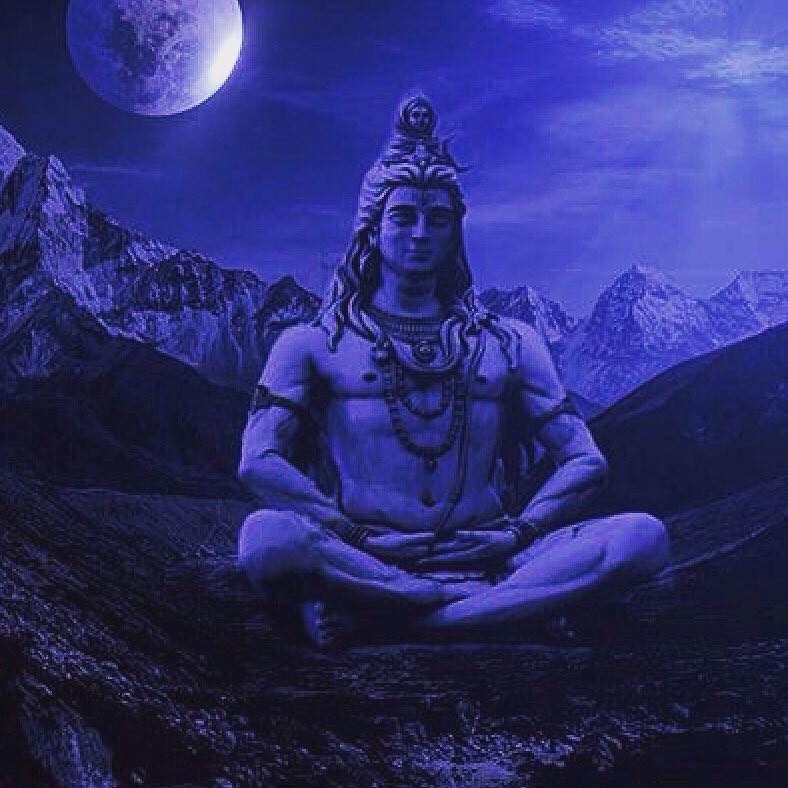
Maha Shivratri falls on the 14th night of the waning moon in the lunar month of Phalguna. Unlike most Hindu festivals that are tied to the waxing moon symbols of growth and outward energy, Shivratri belongs to the dark phase, when the moon is almost absent from the sky.
In yogic sciences, the waning moon is associated with inward movement. As lunar influence recedes, the human system naturally inclines toward introspection. Among the twelve Shivratris that occur each year, Maha Shivratri is considered the most potent because the lunar absence is at its peak.
It is a night designed by nature for turning inward, whether one calls it meditation, prayer, or simply sitting quietly with oneself.
The Vertical Spine: The Subtle Science of the 12° Angle
One of the lesser-known aspects of Maha Shivratri is its planetary geometry. According to yogic understanding, on this night, the position of the planet in the Northern Hemisphere creates a natural upward pull in human energy.
The human nervous system is structured around the spine. When the spine is vertical, energy flows with minimal resistance. Slouching or lying down disrupts this natural movement. Staying awake with an erect spine on Shivratri is essentially a biological hack, aligning posture with planetary support to help energy rise from the base of the spine toward the crown.
You don’t need complex yogic techniques for this. Simply sitting comfortably with awareness is enough.
Legends of the Mahadev: From Marriage to Meditation
Shiva’s stories are often narrated as mythology, but each carries symbolic depth meant for inner reflection.
- The Divine Union: The marriage of Shiva and Parvati is not just a celestial event. It represents the union of consciousness (Shiva) and energy (Shakti). One without the other is incomplete. Creation happens only when both are balanced.
- The Neelkanth: When Shiva consumes the Halahala poison during the churning of the ocean, he does not destroy it. He holds it in his throat. This act symbolises responsibility, the ability to face poison without letting it enter one’s system. In modern life, this translates to encountering chaos without becoming chaotic.
- The Pillar of Fire: The Lingodbhava story, where Shiva appears as an endless column of light, points toward the idea of infinity. The Shiva Linga is not a form to be worshipped as an idol, but a geometric symbol of boundlessness.
The Anatomy of a Ritual: Senses in Devotion
Rituals often lose meaning when the “why” is forgotten. Shivratri rituals, when understood correctly, are deeply practical.
- Abhishek: Water cools and purifies. Milk soothes. Honey balances. Together, they symbolise cleansing the body, calming the mind, and sweetening one’s inner state.
- The Bael (Aegle marmelos) Leaf: The bilva (bael) leaf is medicinal, cooling, and light. Its trifoliate shape represents the three gunas, sattva, rajas, and tamas, reminding us that liberation comes from balance, not suppression.
- Mantra as Vibration: “Om Namah Shivaya” is not a chant for volume. It is a vibrational reset. Slow repetition naturally steadies breathing, calms the nervous system, and creates internal rhythm.
A Traveler’s Pilgrimage: Where the Night Never Ends
For those who experience spirituality through place and movement, certain locations in India amplify Shivratri’s essence.
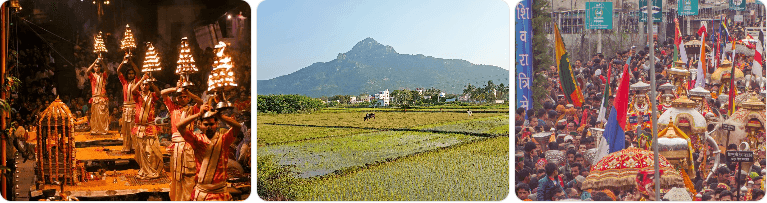
- Varanasi: Here, life and death coexist openly. On Shivratri, the city does not sleep. Temple bells, funeral pyres, and silent meditation merge into one continuous awareness.
- Tiruvannamalai: Home to Arunachala, the fire element manifests here not in flame, but in presence. The Girivalam, a barefoot circumambulation of the hill, is meditation in motion.
- Mandi: Often called the “Varanasi of the Hills,” Mandi hosts one of North India’s most culturally rooted Shivratri gatherings, less spectacle, more community.
Preparing the Vessel: Fasting and Inner Housekeeping
Fasting on Shivratri is not about denial. It is about reducing noise.
A light, sattvic diet of fruits, roots like sabudana or kuttu, and dairy keeps the digestive system calm, allowing energy to move upward instead of outward.
Equally important is digital fasting. Silence the notifications. Lower the mental volume. Even a few hours without screens can create surprising clarity.
Shivratri for the Modern Seeker: Finding Kailash at Home
You don’t need a mountain, a cave, or a temple to observe Maha Shivratri meaningfully.
For someone living in a fast-paced city:
- Clean one quiet corner of your home
- Sit with a straight spine
- Keep the lights dim
- Breathe slowly
- Repeat “Om Namah Shivaya” softly or mentally
Maha Shivratri is a reminder that at the core of all the noise, movement, and chaos of life, there is a “Shiva”, a point of absolute stillness. This night is a window. All you have to do is keep it open.
Frequently Asked Questions on Maha Shivratri
Q1. When is Maha Shivratri in 2026?
Maha Shivratri in 2026 will be observed on 15 February. The festival falls on the 14th night of the waning moon in the lunar month of Phalguna.
Q2. Why is Maha Shivratri celebrated at night?
Unlike most festivals linked to the full moon, Shivratri aligns with the darkest lunar phase. This natural withdrawal of lunar influence supports inward focus, meditation, and heightened awareness during the night.
Q3. What should I eat while fasting on Maha Shivratri?
A light sattvic diet is traditionally preferred, including fruits, milk, curd, nuts, sabudana, and kuttu preparations. The intention is to keep digestion minimal so the body and mind remain calm and alert.
Q4. Why do we offer Bilva (bael) leaves to Shiva?
Bilva leaves have cooling and medicinal properties and are considered supportive for mental balance. Their three-lobed shape symbolises harmony between the three gunas: sattva, rajas, and tamas.