
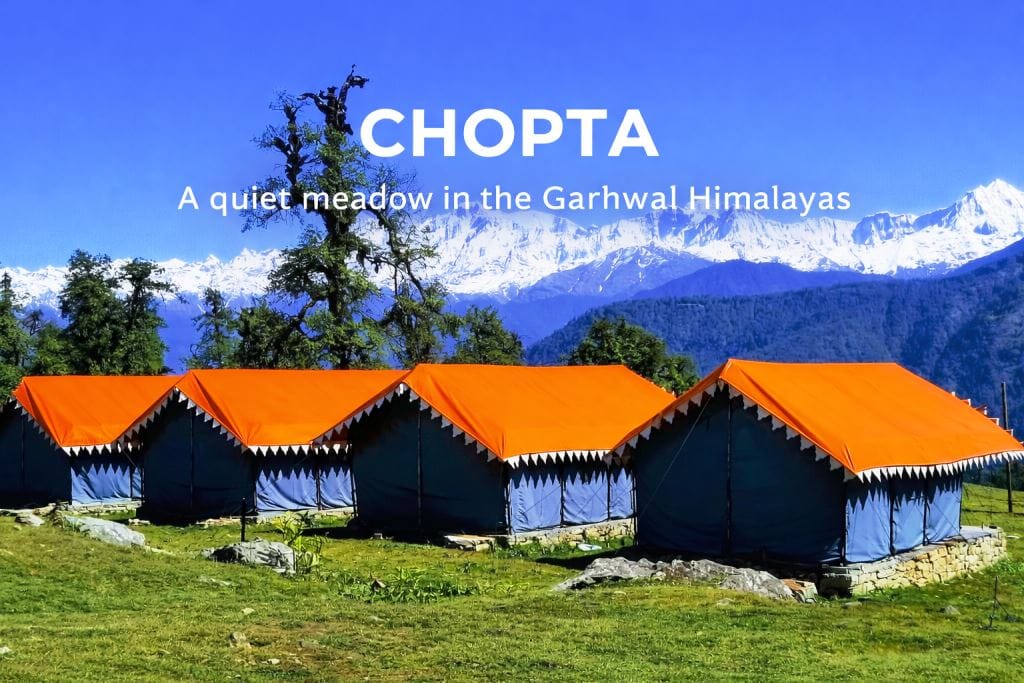

Chopta is not a town in the usual sense. There is no market square, no main street, no sense of hurry. What exists instead is a wide alpine meadow edged by oak and rhododendron forests, where the air feels lighter, and the mountains seem closer than your thoughts.
Set high in Uttarakhand’s Garhwal Himalayas, Chopta is a place you arrive at slowly, and leave with reluctance. Many people pass through on their way to Tungnath or Chandrashila. Those who stay a little longer begin to understand that Chopta itself is not a stopover.
What Makes Chopta Unique?
Chopta is often compared to hill stations elsewhere and sometimes labelled the “Mini Switzerland of Uttarakhand”. The comparison falls apart quickly.
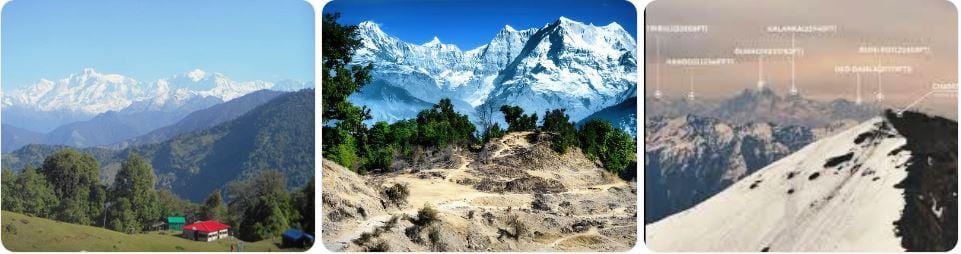
There are no cafés with printed menus, no souvenir stalls, no railings telling you where to stand. What Chopta offers instead is space, open meadows, quiet forest edges, and long, unbroken views of the Himalayas.
On clear days, peaks like Chaukhamba, Trishul, and Nanda Devi rise straight from the horizon, without drama or effort.
You don’t come to Chopta to do many things. You come here to notice what happens when nothing is demanding your attention.
The Geography of Stillness: Altitude and Location of Chopta
Chopta lies in the Rudraprayag district at an altitude of roughly 2,680 metres. It sits along the road connecting Gopeshwar and Ukhimath, surrounded by forests that shift colour with the seasons.
Despite growing recognition, Chopta has remained largely unchanged. Development is limited, partly by regulation and partly by terrain. Nature still decides the pace here, and everything else adjusts around it.
When to Visit Chopta: A Season-by-Season Breakdown
One of Chopta’s quiet strengths is how completely it transforms over the year.
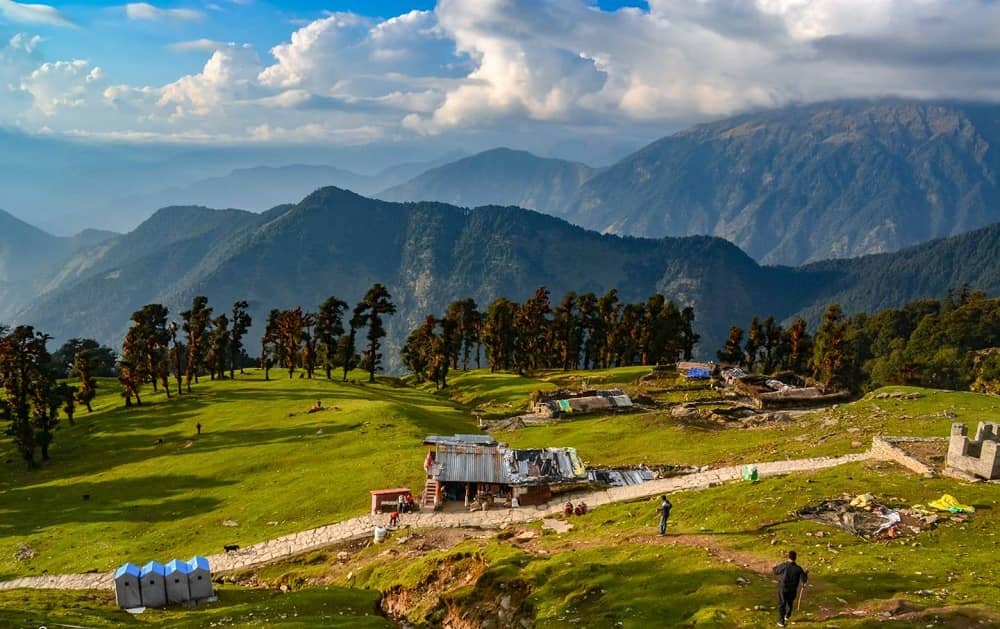
- Spring and early summer (April to June): The meadows turn green, rhododendrons bloom across the slopes, and the air stays cool. Chopta feels awake during these months, but never overwhelmed.
- Monsoon (July to August): Mist rolls in, visibility drops, and the forests grow dense and saturated. Silence deepens, though travel requires caution due to rain and road conditions.
- Autumn (September to November): Skies sharpen, mountain lines become clear, and the air turns crisp. Many consider this the most balanced time to experience Chopta.
- Winter (December to February): Snow settles over the meadows and forests. Roads may close temporarily, and facilities are limited, but winter brings a stillness that few places offer anymore.
Staying in Chopta: Simple and Unhurried
Accommodation in Chopta is modest and functional. Most options fall into three categories:
- Small guesthouses
- Eco-lodges
- Fixed camps
Rooms are basic, but evenings are warm, often spent near a fire, with simple food and little conversation. Mobile networks are unreliable, a fact most travellers come to appreciate sooner than expected.
Walking Without a Plan
One of the best ways to experience Chopta is to walk without an agenda.
Short trails slip quietly into the forest. Clearings appear without warning. You might encounter grazing sheep, a lone shepherd, or a sudden opening where snow peaks frame the sky between trees.
No signs are telling you where to stop. Chopta rewards unstructured time.
Chopta as a Starting Point, Not a Shortcut
Chopta is widely known as the base for the trek to Tungnath Temple and onward to Chandrashila peak. These routes begin here, but Chopta itself remains unchanged by the traffic they bring.
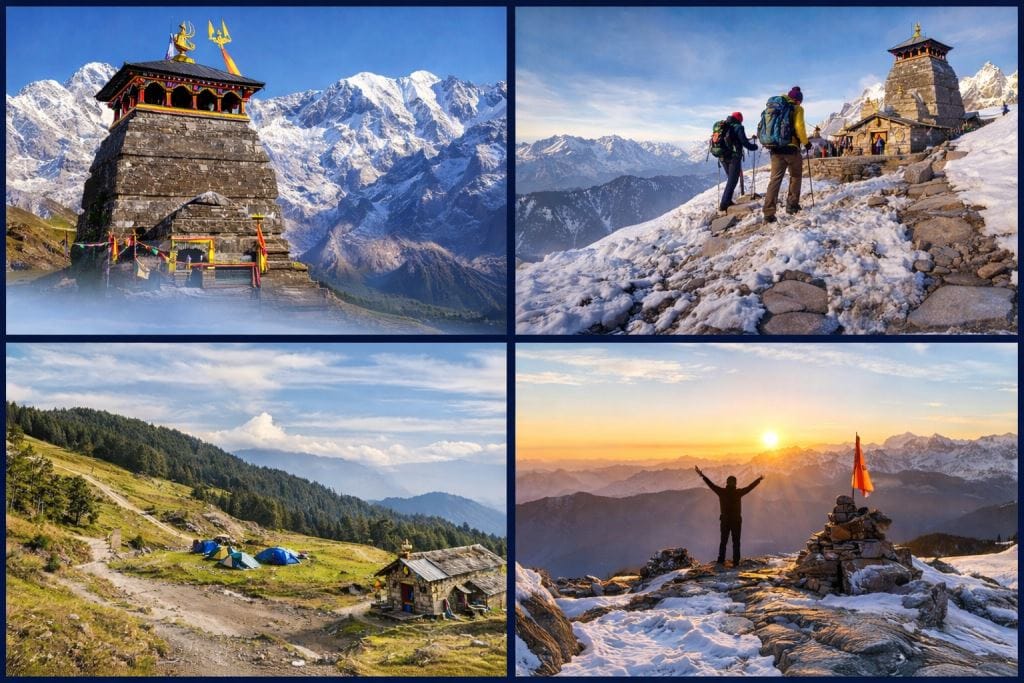
Many travellers arrive late, leave early, and never realise what they’ve stepped past.
The trails may climb upward, but Chopta stays grounded, content to be a beginning rather than a highlight.
Food and Essentials in Chopta, Uttarakhand
Food in Chopta is limited but sustaining. Most stays serve simple vegetarian meals, dal, rice, roti, and seasonal vegetables. During peak months, small roadside stalls may offer tea and basic snacks.
It helps to carry:
- Basic medicines
- Power banks
- Warm layers, even in summer
Chopta is not a place to overpack, but preparation matters.
Who Should Visit Chopta?
Chopta suits those willing to slow down.
- Travellers who value quiet over checklists
- Nature-focused visitors
- Writers, photographers, and solo travellers
- Those easing into or resting after temple journeys
It may disappoint anyone looking for nightlife, shopping, or tightly managed itineraries.
Chopta and Tungnath: One Landscape, Two Experiences
Chopta and Tungnath are closely linked, but they ask different things of you.
- Chopta is about staying, about landscape, patience, and stillness.
- Tungnath is about ascent, devotion, effort, and altitude.
Keeping their stories separate strengthens both. This distinction matters.
How to reach Chopta, Uttarakhand
Chopta is reached by road, and the journey itself sets the pace.
The nearest major town is Ukhimath, which is well connected by road to Rudraprayag and Rishikesh. From Ukhimath, Chopta lies about 30 km uphill, through forests and open stretches where traffic thins out noticeably.
- By road: Rishikesh → Rudraprayag → Ukhimath → Chopta. Regular taxis and shared jeeps are available up to Ukhimath. The final stretch is best done by private taxi, especially outside peak season.
- By train: The nearest railway station is Rishikesh (around 200 km). From there, the rest of the journey continues by road.
- By air: The closest airport is Jolly Grant Airport, Dehradun. Road travel from the airport takes most of a day.
Road conditions can change with the weather, especially during the monsoon and winter. Starting early and allowing buffer time makes the journey easier.
Why Chopta Lingers
What people remember about Chopta is rarely a single view or moment. It’s the quiet of the mornings, the way evenings arrive without announcement, and the sense that time loosened its grip while they were there.
Chopta doesn’t try to hold your attention. It waits, and that patience is its rarest quality.