


High in the Garhwal Himalaya of Uttarakhand, the Panch Kedar Yatra is one of India’s most demanding and culturally significant Shiva pilgrimage circuits. Unlike the more accessible Char Dham shrines, the Panch Kedar route involves multiple high-altitude treks, remote mountain villages, and seasonal temple openings that require preparation and physical stamina.
The five temples, Kedarnath Temple, Madhyamaheshwar Temple, Tungnath Temple, Rudranath Temple, and Kalpeshwar Temple, together form a traditional Himalayan pilgrimage linked to the legend of Lord Shiva’s manifestation in five sacred forms.
The Sacred Legend Behind Panch Kedar
According to tradition, after the Mahabharata war, the Pandavas sought forgiveness from Lord Shiva. Shiva avoided them and took the form of a bull. When Bhima tried to catch him, the bull disappeared into the earth, reappearing in five different parts across the Himalayas.
Each temple represents one part:
- Kedarnath – the hump
- Madhyamaheshwar – the navel
- Tungnath – the arms
- Rudranath – the face
- Kalpeshwar – the hair
This is not just mythology; it defines the spiritual geography of the region.
The “Sixth” Kedar: A Traditional Extension of the Legend
Pashupatinath Temple, some devotional traditions extend the Panch Kedar legend beyond Uttarakhand.
According to this extended belief, while five parts of Shiva (in bull form) appeared in the Garhwal Himalaya, the head of the bull is believed by some to have manifested at Pashupatinath in Kathmandu, Nepal.
This idea is not part of the formal Panch Kedar pilgrimage circuit. The five recognised temples remain those in Uttarakhand. However, the belief reflects how sacred geography in the Himalaya often transcends modern political borders.
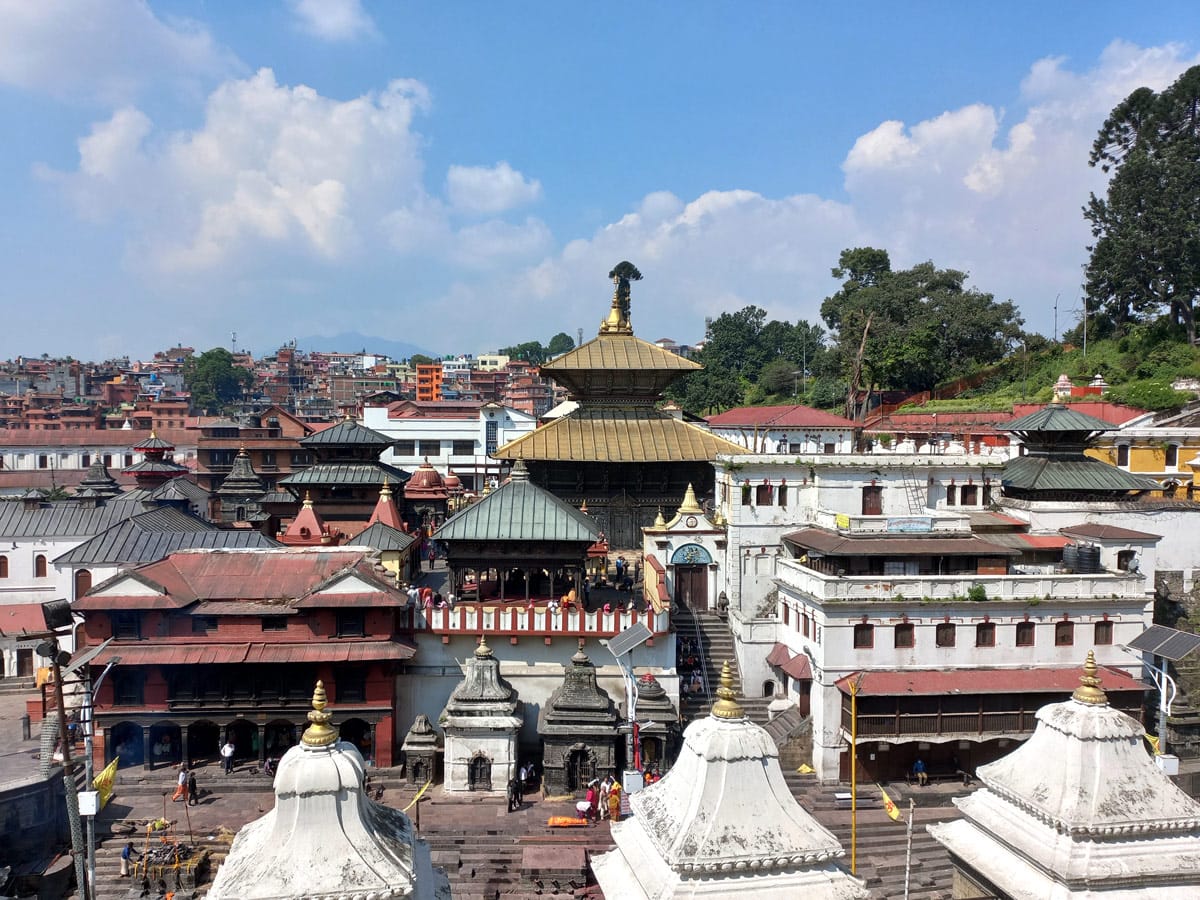
Pashupatinath temple is one of the most revered Shiva temples in South Asia and has long-standing spiritual connections with Himalayan traditions. The association with Panch Kedar is devotional rather than scripturally standardised.
For travellers, this is best understood as a cultural extension of the legend, not an official sixth stop in the yatra.
Panch Kedar: Expanded Route & Context Guide
Most yatris follow this sequence:
Kedarnath → Madhyamaheshwar → Tungnath → Rudranath → Kalpeshwar
- Total journey duration: 12–18 days (depending on pace and weather)
- Best season: May–June & September–October
1. Kedarnath Temple: The Anchor Shrine
- Trek: 16 km from Gaurikund
- Altitude: 3,583 m
- Difficulty: Moderate
Kedarnath functions as the spiritual anchor of the Panch Kedar circuit. While it is widely known due to Char Dham, within Panch Kedar, it represents the beginning of reconciliation, the hump of Shiva in bull form.
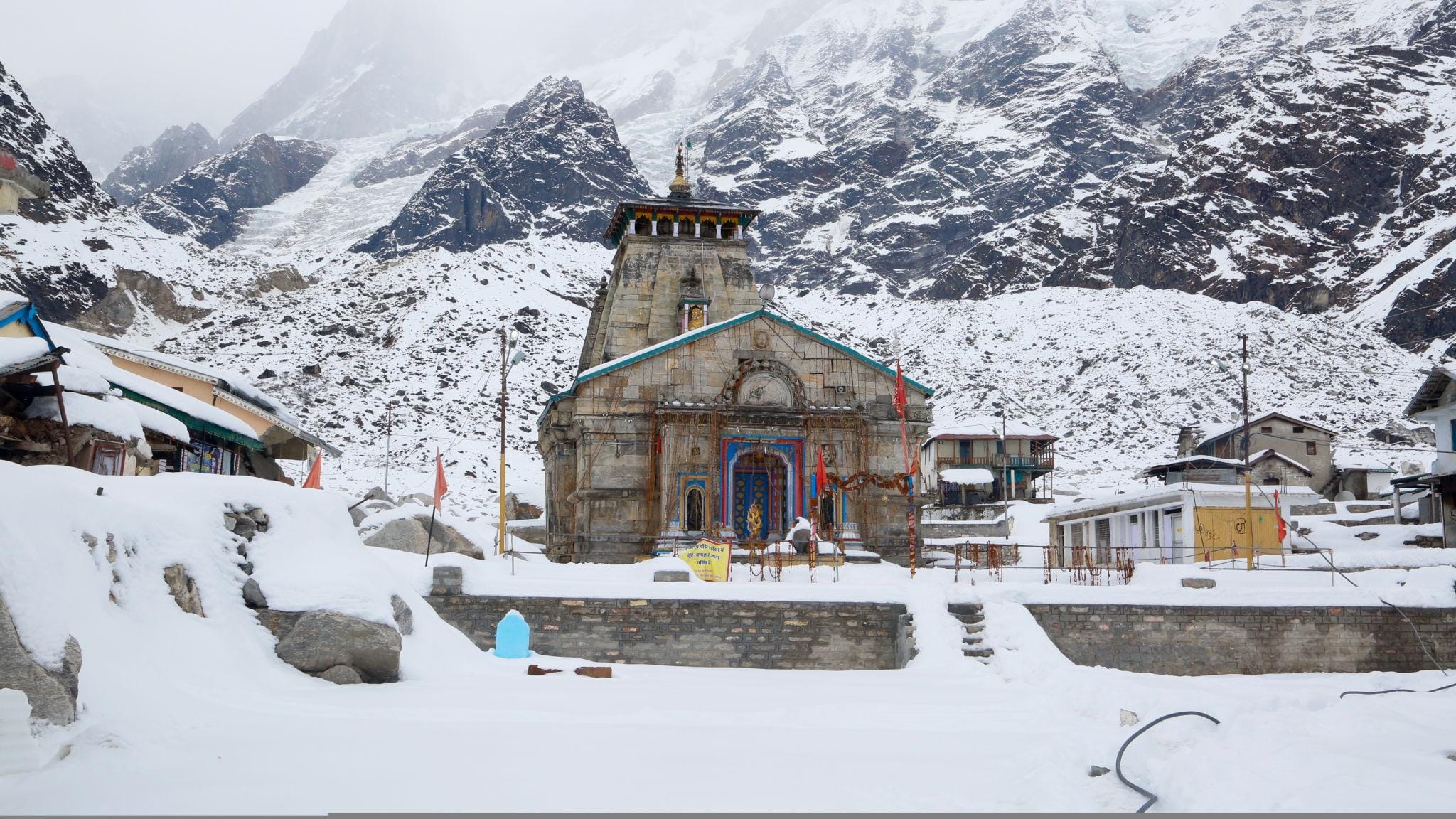
Unlike the more remote Kedars, Kedarnath now has structured facilities, medical camps, helicopter access, and a clearly paved route. Because of this, many pilgrims complete Kedarnath separately and later attempt the remaining four temples.
From a circuit perspective, Kedarnath prepares the body for altitude. It also marks the transition from road-based pilgrimage to deeper trekking terrain in later Kedars.
2. Madhyamaheshwar Temple: Entering the Inner Valleys
- Trek: 18–19 km from Ransi
- Altitude: 3,497 m
- Difficulty: Moderate to Difficult
Madhyamaheshwar marks a shift in experience. Infrastructure is reduced, crowds thin, and the route passes through terraced villages and forest sections before opening into alpine meadows.
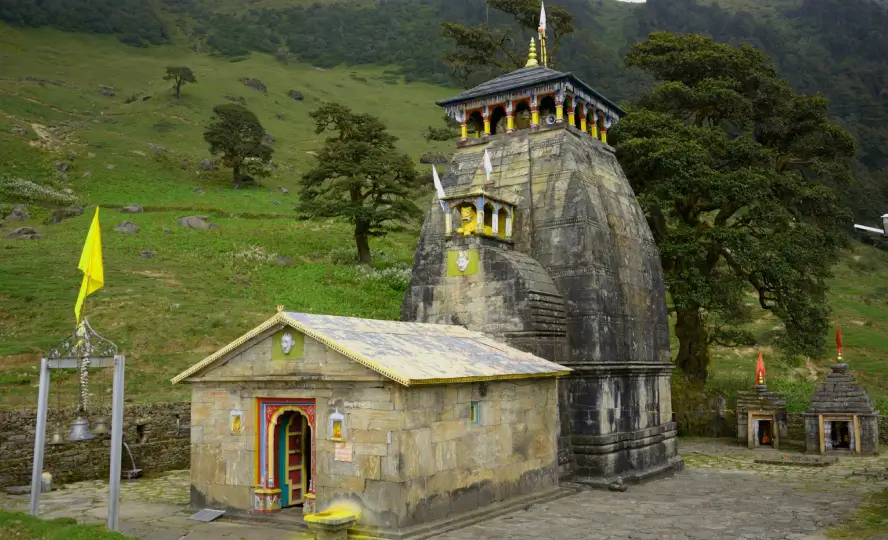
Here, the mountain landscape feels more personal. Local shepherd routes intersect with the pilgrimage path. Weather changes quickly in the afternoon, so early starts are essential.
Traditionally, yatris rested overnight in small stone lodges or temple dharamshalas. Even today, accommodation remains simple, reinforcing that Panch Kedar is still partly a rural Himalayan yatra.
3. Tungnath Temple: The High Stone Shrine
- Trek: 3.5–4 km from Chopta
- Altitude: 3,680 m
- Difficulty: Easy to Moderate
Though the shortest trek, Tungnath sits at the highest elevation among the five (excluding the optional Chandrashila climb). The paved path makes it accessible, but the altitude makes breathing heavier for many visitors.
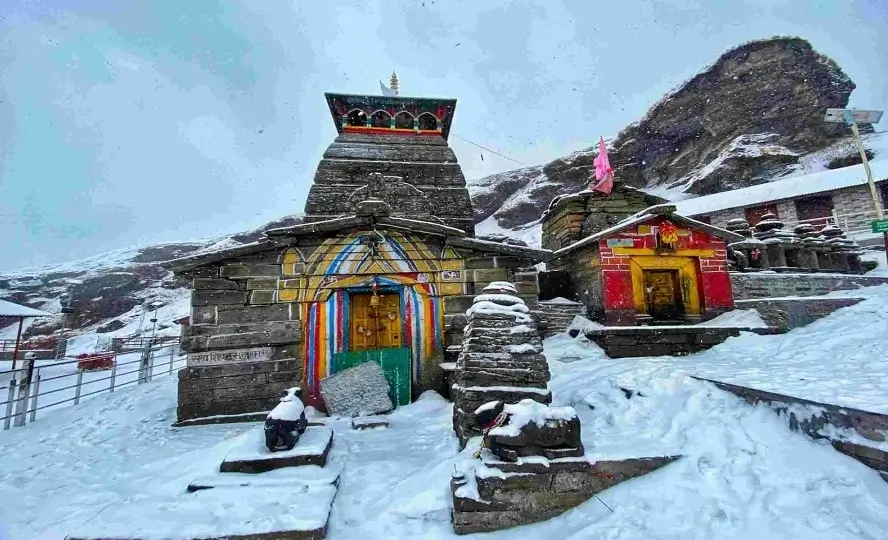
In the Panch Kedar legend, this is where Shiva’s arms appeared. Architecturally, the temple resembles Kedarnath in miniature, stone-built, compact, and resilient against extreme weather.
Because of road connectivity to Chopta, Tungnath sometimes feels more like a structured mountain walk than a remote yatra. However, within the full Panch Kedar sequence, it provides an important acclimatisation point before the most demanding segment: Rudranath.
4. Rudranath Temple: The Most Physically Demanding
- Trek: 20–23 km from Sagar village (common route)
- Altitude: ~3,600 m
- Difficulty: Difficult
Rudranath is widely considered the toughest of the five Kedars. The trail includes long forest sections, exposed ridges, and high-altitude meadows such as Panar Bugyal.
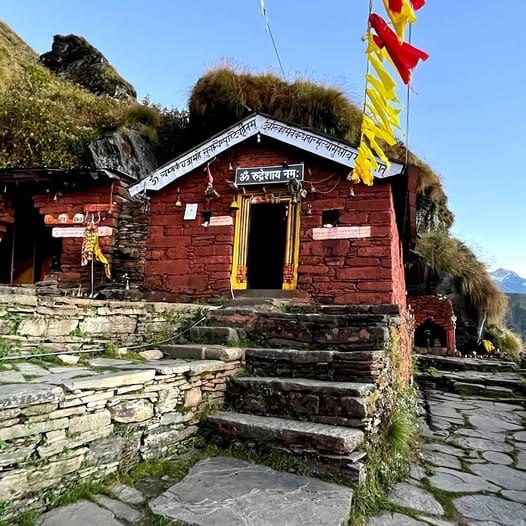
This stretch requires stamina and mental steadiness. The weather can shift rapidly. Fog reduces visibility. Distances feel longer than measured.
Unlike Kedarnath or Tungnath, there is minimal commercial structure here. Pilgrims often rely on basic guesthouses or seasonal huts.
In traditional belief, Rudranath represents Shiva’s face, and many consider this temple the emotional core of Panch Kedar.
5. Kalpeshwar Temple: The Year-Round Kedar
- Trek: 2 km from the Urgam Valley roadhead
- Altitude: 2,200 m
- Difficulty: Easy
Kalpeshwar is unique; it remains open throughout the year. Located inside a small cave shrine, it represents Shiva’s hair (jata).
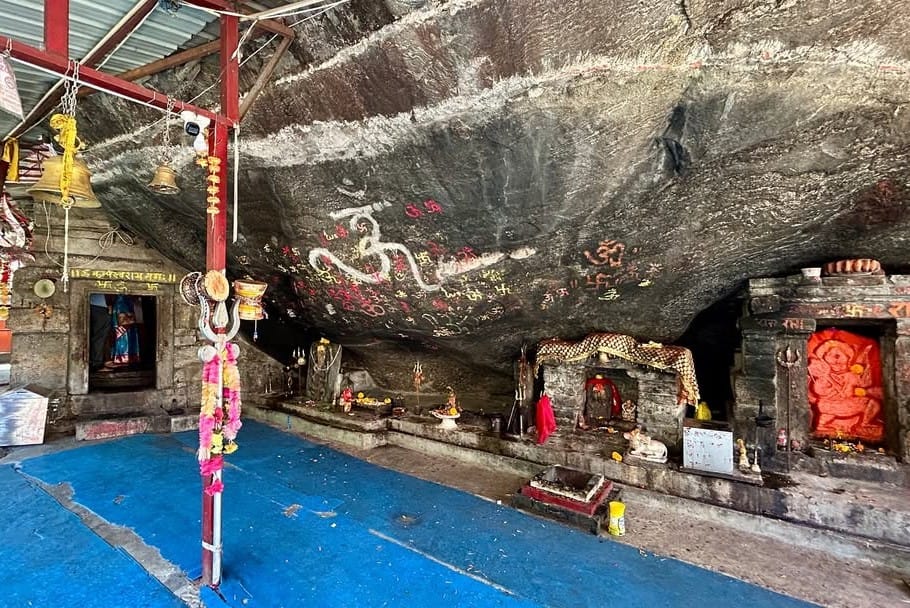
The walk to Kalpeshwar passes through cultivated fields and village homes, offering a glimpse into everyday Himalayan life. After the physical intensity of Rudranath, this final stretch feels grounded and calm.
Because it lies at a lower altitude, it is often accessible even when higher Kedars are closed.
Final Thought
Panch Kedar is not simply a trekking checklist. It is a seasonal Himalayan pilgrimage shaped by terrain, climate, and village traditions. The distances are real. The altitude is demanding. Infrastructure varies. The weather remains unpredictable.
For many travellers today, the circuit is completed over multiple visits, which is practical and sensible. What matters is understanding that these five temples were historically linked by movement, not convenience.
The yatra requires preparation, patience, and respect for mountain conditions. It also requires awareness that these shrines continue to function within living Garhwali communities, not as isolated monuments.
If you approach Panch Kedar with physical readiness and cultural sensitivity, the journey becomes more than a route map. It becomes a way of understanding how devotion, geography, and Himalayan life have remained interconnected for centuries.