

If Kedarnath confronts you and Gangotri calms you, Badrinath does something quieter and more enduring; it settles you.
Situated at around 3,100 meters along the steady course of the Alaknanda River, Badrinath is not an isolated shrine carved out of wilderness. It is a living town, shaped by centuries of worship, habitation, routine, and return. Pilgrims don’t just arrive here; they stay, observe, and slowly fall into rhythm.
This quality makes Badrinath a crucial part of the Char Dham Yatra. It is the place where faith stops being an emotional peak and begins to resemble daily life.
A Living Town: Faith in the Flow of the Alaknanda
The first thing many travellers notice about Badrinath is not the temple, but the river.
The Alaknanda flows wide and purposeful here, neither dramatic nor restrained, but steady. Shops line the road. Monks walk past guesthouses. Families sit outside tea stalls. Bells ring, but so do conversations.
Unlike Kedarnath, where the landscape dominates every thought, Badrinath feels inhabited humanly. Life continues around the sacred. Faith does not suspend daily existence; it moves alongside it.
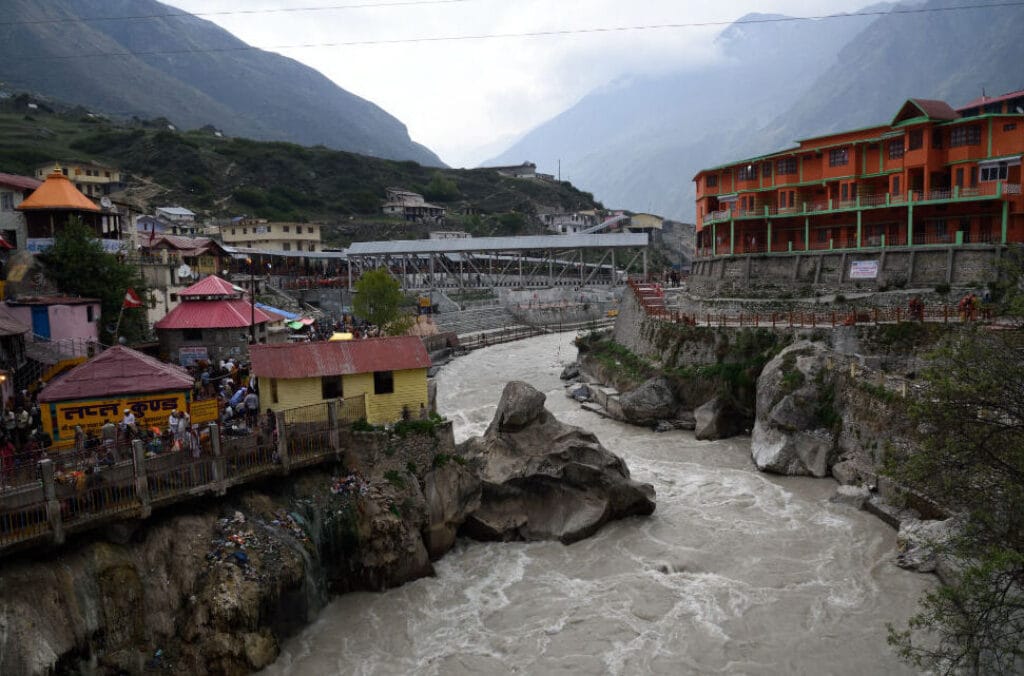
This coexistence is not accidental. Badrinath has long been a centre of learning, pilgrimage, and settlement. The town exists because the temple exists—but it survives because people live here year after year, not seasonally.
In this sense, Badrinath feels less like a destination and more like a continuum.
The Architecture of Devotion: Rituals and Rhythms
The Badrinath Temple itself reflects this idea of order.
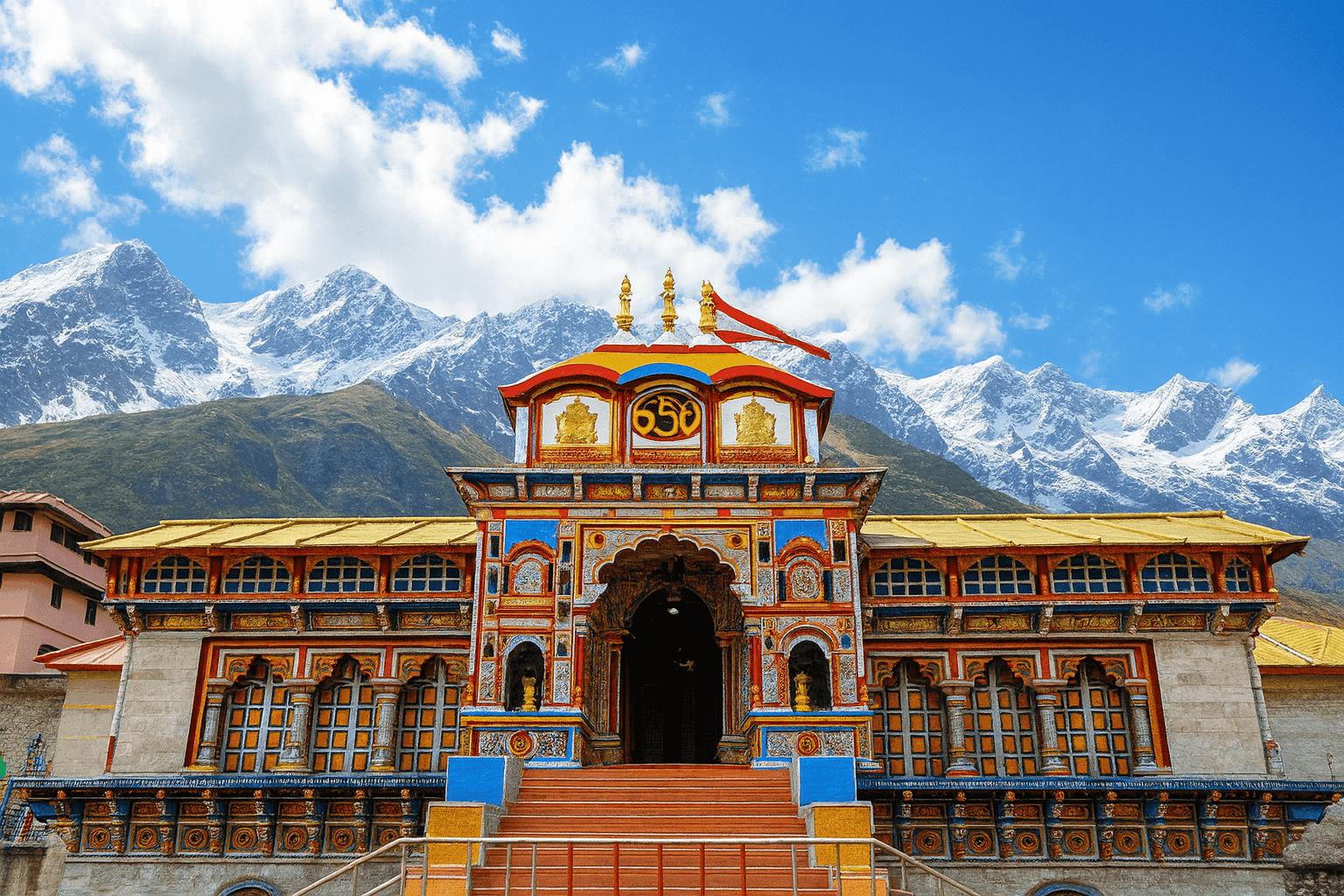
Its brightly coloured façade stands out against the muted browns and greys of the surrounding valley, yet the structure does not feel intrusive. It feels established and rooted. The rituals here follow a strict daily schedule, refined over generations.
Morning aarti begins early. Midday darshan flows steadily. Evening rituals close the day with precision. There is comfort in this predictability.
Pilgrims often spend more time here than at other dhams. They attend multiple aartis. They observe rituals instead of rushing through them. Some return year after year, knowing exactly when the lamps will be lit and when the doors will close.
This repetition is the essence of Badrinath. It teaches that devotion is not always intensity—it is practice.
Mana: Where the Last (now First) Village Meets the First Principle
A short distance beyond the temple lies Mana, often called the last Indian village (now called the first Indian village) before the Tibetan border. It is easy to visit, but difficult to forget.
Mana is not symbolic; it is functional. People farm here. Children attend school. Elders tell stories that blur history and epic memory. The Mahabharata is not treated as distant mythology here; it is geography.
This proximity to lived history reinforces Badrinath’s character. Faith here is not frozen in time. It adapts, settles, and continues.
Standing in Mana, you understand something important: Badrinath has always been about integration, not isolation. It is where scripture meets settlement, where philosophy meets survival.
The Anchor of the Yatra: A Grounding Contrast to Kedarnath
Within the Char Dham circuit, Badrinath plays a crucial psychological role.
After Kedarnath’s raw altitude and emotional exposure, many pilgrims arrive in Badrinath carrying exhaustion—physical and mental. The town absorbs this quietly. Roads are wider. Facilities are more developed. The river feels reassuring rather than threatening.
This contrast is not a weakness. It is intentional balance.
Badrinath anchors the yatra. It brings travellers back into a world where devotion does not require constant endurance. Where belief can coexist with comfort, routine, and conversation.
Without Badrinath, the Char Dham would feel incomplete—too extreme, too unresolved.
Seasons of Badrinath: Choosing Your Moment
Badrinath’s character shifts with the seasons, though its rhythm remains intact.
- Early Season (May–June): Snow still clings to the surrounding slopes. The town wakes slowly after winter closure. The contrast between cold air and warm rituals is striking.
- Mid-Season (July–August): Monsoon clouds gather. The river swells. Travel requires patience, but the landscape feels alive and dramatic.
- Late Season (September–October): Perhaps the most reflective time. Crowds thin. Air sharpens. Rituals feel more intimate.
Winter closes the temple entirely, reminding everyone that even continuity must respect the Himalaya’s limits.
The Final Loop: Integration, Community, and Continuity
Badrinath often completes the Char Dham Yatra, and that is fitting.
You do not leave here overwhelmed or emptied. You leave integrated. The extremes of the journey—altitude, effort, emotion—begin to settle into understanding.
Badrinath teaches a quiet truth: spirituality survives not because it is intense, but because it is repeatable. Because it can exist in towns, in schedules, in shared spaces.
It is where the yatra stops feeling like a test and starts feeling like a way of life.
And perhaps that is why people return here—not to be changed, but to remember how to continue.