
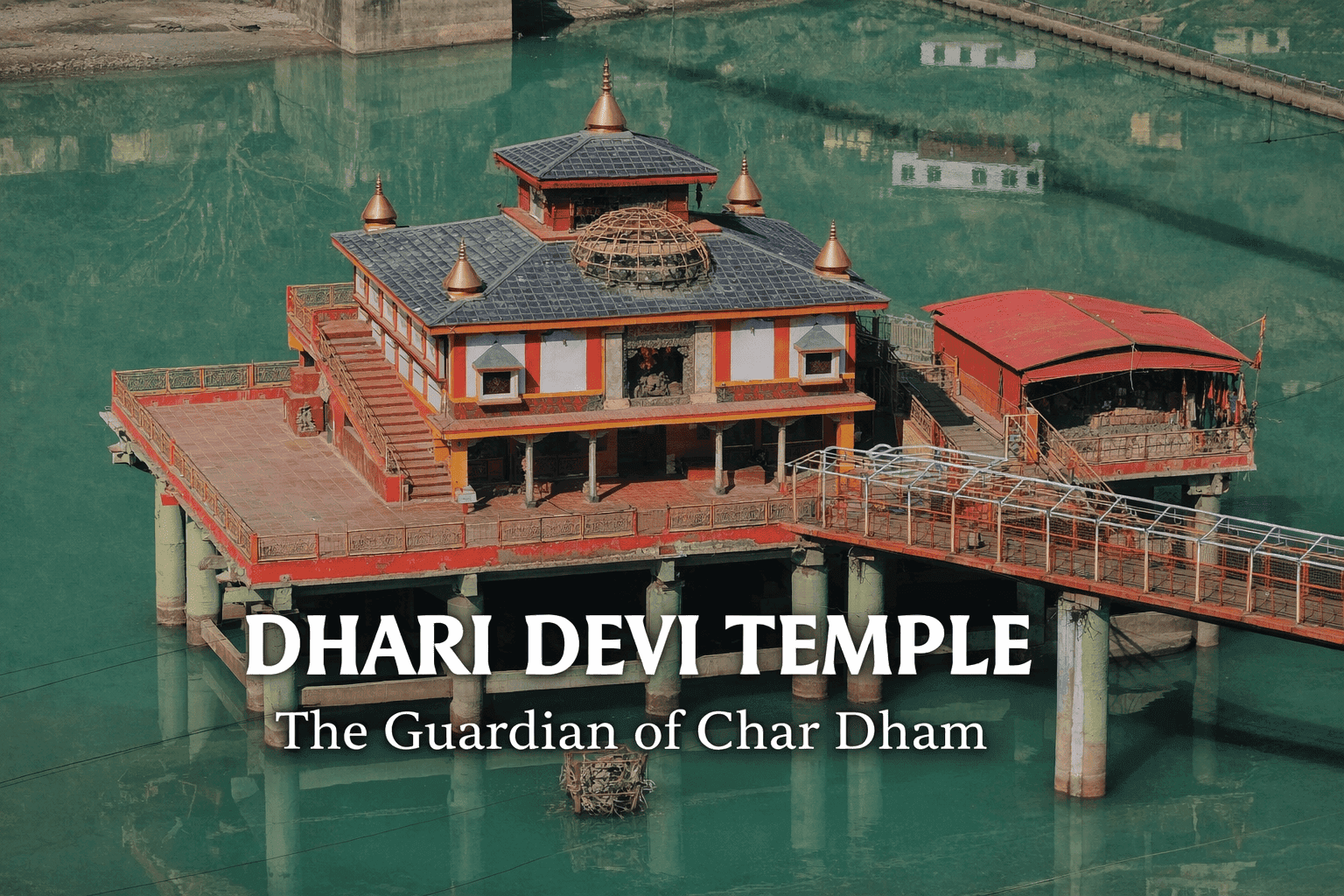

The Alaknanda River moves fast here, loud, restless, and unfiltered. Bells ring somewhere above the water, not in rhythm, but in response to it. Standing on the bridge that leads to Dhari Devi Temple, you don’t feel like you’re arriving at a monument. You feel like you’re entering a space that’s already alive.
For many pilgrims heading toward Kedarnath, this temple is a short halt. A few minutes. A prayer. A photo. Then back on the road. But that approach misses the point.
Dhari Devi isn’t meant to be rushed. She isn’t decorative. Locals don’t describe her as “beautiful” or “grand.” They describe her as present. Watchful. Unmoving in authority, even as everything around her, river, road, weather, people, keeps changing.
The Phenomenon: Three Faces in One Sun
Ask ten locals about Dhari Devi, and most won’t start with history. They’ll talk about her face.
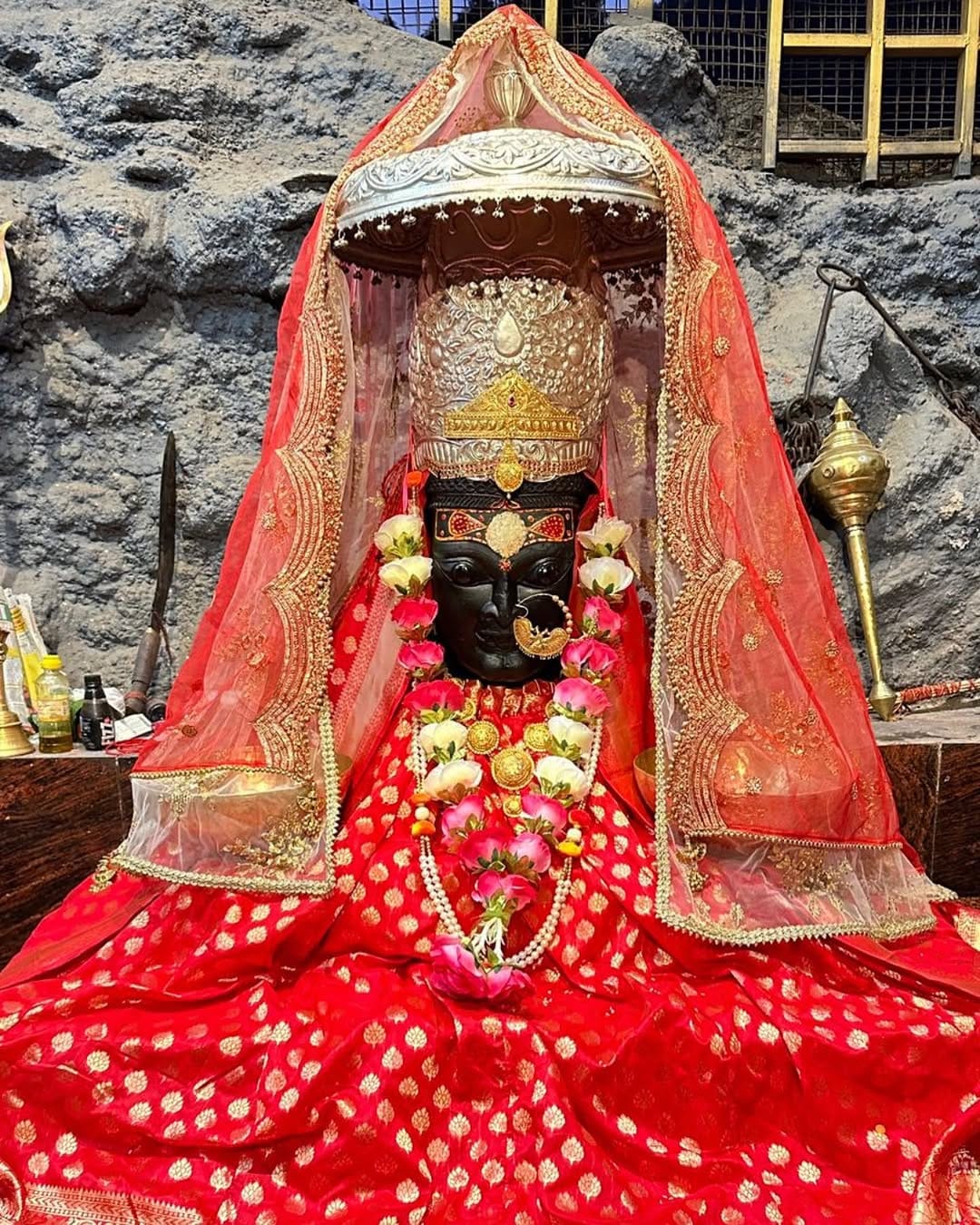
Child, Woman, Matriarch
Devotees believe the idol of the Goddess changes appearance throughout the day.
- Morning: She appears young, almost childlike. The features look softer, the energy gentler.
- Afternoon: The face is sharper, stronger. This is when she’s seen as a protector in full command.
- Evening: The features seem older, settled, and watchful. Many say this is when her gaze feels the heaviest.
No scientific explanation has ever been offered, and locals aren’t interested in one. They don’t argue about whether it’s perception, light, or belief. They just say: stay long enough, and you’ll notice it yourself.
One priest once explained it simply: “By evening, the Goddess feels tired but not weak. She feels like someone who has seen everything.”
Why the Roof Stays Open
Dhari Devi Temple has no roof over the idol. This isn’t an architectural oversight; it’s intentional.
The belief is clear: the Goddess must breathe the mountain air. Enclosing her would restrict her presence. Rain, sun, cold, everything reaches her as it reaches the land she protects.
In the Himalayas, protection isn’t about comfort. It’s about endurance.
The Guardian and the 2013 Catastrophe
If Dhari Devi were only about faith, her story might have stayed local. But 2013 changed that.
The Moment the Idol Moved
During the construction of the Srinagar Hydel Project, the idol was relocated from its original riverside position. This decision was administrative, technical, and for locals, deeply unsettling.
Soon after, catastrophic floods devastated large parts of Uttarakhand. To the outside world, it was a natural disaster. To the people living here, it was a warning.
This is where the title Guardian of Char Dham comes from. Dhari Devi is believed to protect not just one valley, but the spiritual axis of Uttarakhand itself, the Char Dham.
Myth vs. Coincidence: What Locals Truly Believe
Locals don’t frame the floods as punishment. That’s an important distinction. They talk about imbalance.
Disturb the river. Shift the deity. Ignore the rhythm of the mountains, and consequences follow. Not out of anger, but inevitability.
It’s less a myth, more a reminder: the Himalayas don’t respond well to force.
Essential Pilgrim’s Guide: The Soulful Logistics
Dhari Devi rewards those who arrive informed and unhurried.
Finding Your Way to Kalyasaur
The temple is located near Kalyasaur, about:
- 15 km from Srinagar
- 122 km from Rishikesh
It sits directly on the Badrinath highway, making it an easy stop, but an easy stop shouldn’t mean a careless one. If you’re exploring Srinagar, Uttarakhand sightseeing, this temple deserves more than a checklist visit.
The Bridge Walk: A Passage of Faith
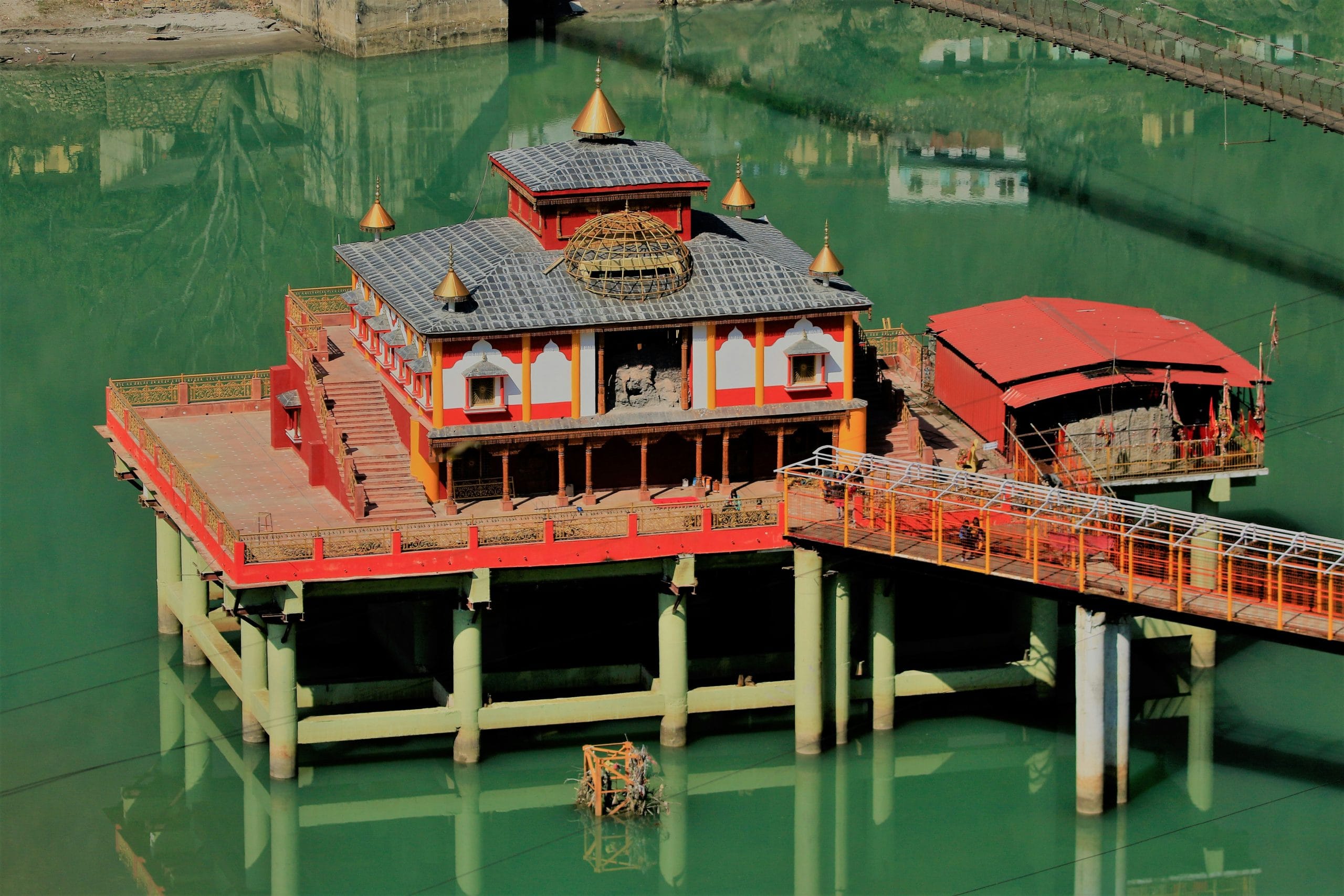
To reach the shrine, you cross a narrow footbridge over the Alaknanda.
Pause here, feel the vibration under your feet. Watch how people instinctively lower their voices. This walk is short, but it resets you. By the time you reach the idol, you’re already quieter inside.
Local Pro Tip
Just before the bridge, there’s a small stall selling hot chai and singodi (a local sweet wrapped in a leaf). Have it after darshan, not before. Locals believe you should meet the Goddess empty-handed and leave nourished.
Why Dhari Devi Is More Than a Stop
Dhari Devi Temple isn’t about spectacle. There’s no elaborate complex, no long corridors of carvings. What stays with you is the feeling that something ancient is still actively paying attention.
This is why many pilgrims say Dhari Devi doesn’t call everyone, but she stops those who are meant to pause.
If you’re walking the Char Dham route looking only to complete it, you’ll pass through.