
High in the Garhwal Himalaya, long before the Ganga becomes a river of cities, stories, and ceremonies, she appears quietly at Gangotri Temple. At an altitude of a little over 3,100 meters, Gangotri does not announce itself with drama. It does not overwhelm the senses or rush you into belief. Instead, it slows you down, almost deliberately, until your breathing adjusts, your thoughts soften, and your attention turns inward.
Here, the Ganga is not yet the vast, life-carrying force known across northern India. She flows as the Bhagirathi, narrow, cold, and restrained. The river moves steadily past smooth stones, not roaring, not performing. It feels aware of the long distance ahead, as if conserving strength for the journey through forests, towns, plains, and finally the sea.
For many pilgrims, especially those who have already encountered Gangotri through Char Dham narratives, arriving here feels less like checking off a sacred site and more like returning to the source of a familiar presence.
A Different Kind of Himalayan Shrine
Compared to Kedarnath’s vertical drama or Badrinath’s scale and ritual intensity, Gangotri occupies a gentler emotional register. Even during the Char Dham Yatra season, the atmosphere remains composed. Crowds exist, but they are quieter. Conversations drop in volume. People walk more slowly, pausing often by the river, near the temple walls, or simply to look up at the surrounding ridgelines.
Geography Shapes Belief Here
The setting of Gangotri plays a central role in shaping the experience of the place. The valley is broad and open, ringed by pine forests and high Himalayan ridges. There are no claustrophobic rock walls or overwhelming cliffs. Instead, the landscape provides space both physically and mentally.
The Bhagirathi flows through the valley with clarity and purpose, its icy waters reflecting the light differently at every hour. Standing near the river, it becomes easier to understand why ancient stories rooted divinity in geography.
According to tradition, this is where Goddess Ganga descended to Earth after King Bhagiratha’s long penance, her force tempered by Lord Shiva before being released as a river. But when you watch the water here, cold, controlled, deliberate, the story feels less like mythology and more like an intuitive reading of the land itself.
Glaciers melt. Water gathers. Gravity guides it downward. Here, belief and geology don’t just coexist; they overlap. The sacred is not separate from the scientific; it runs through it.
The Gangotri Temple Experience
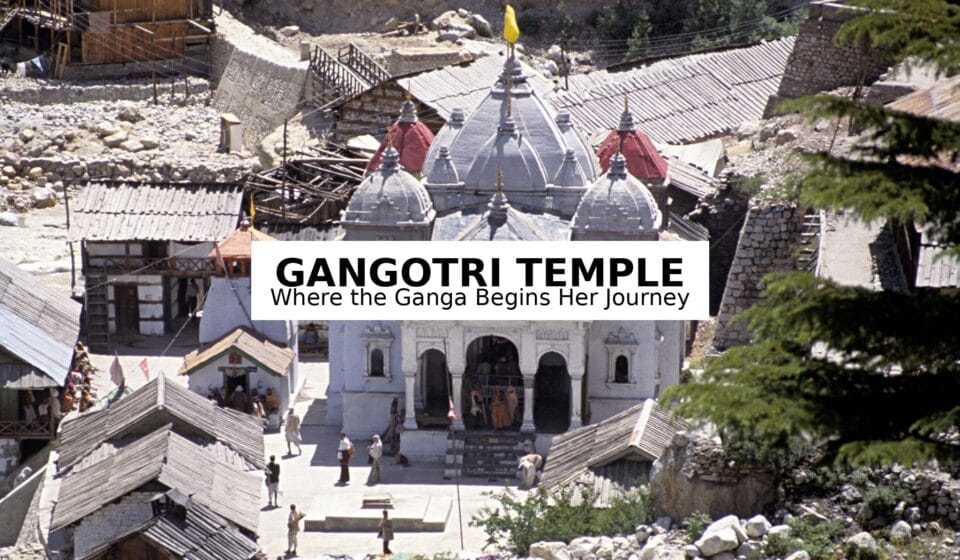
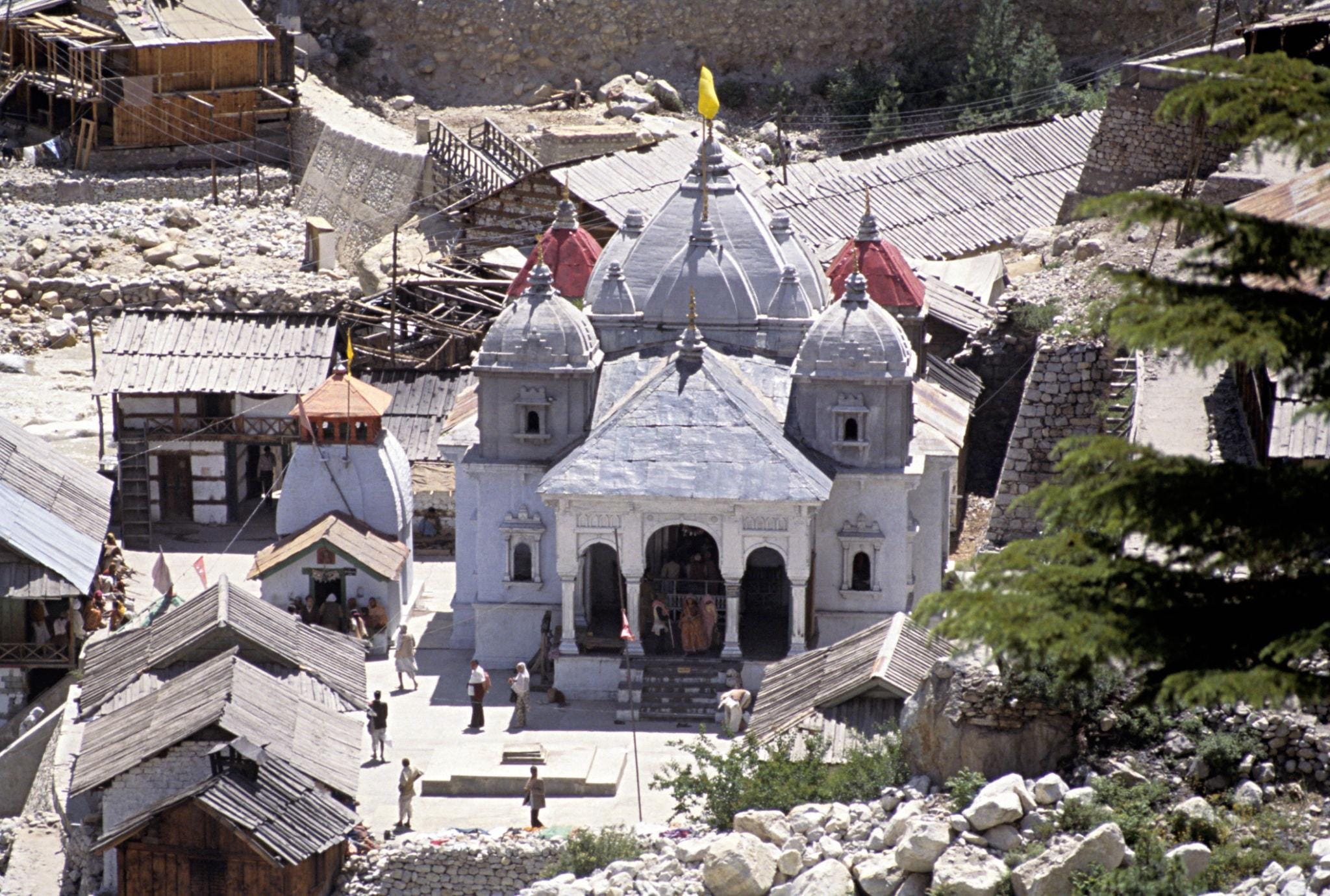
The Gangotri Temple mirrors the character of its surroundings. Built of white stone, it is modest in scale, with clean lines and minimal ornamentation. There is no attempt at grandeur. The structure feels grounded, almost secondary to the river flowing beside it.
Inside and around the temple, rituals remain simple. Pilgrims collect water from the Bhagirathi, offer prayers, and often stay longer than planned. There is no sense of being hurried along, no pressure to “complete” the visit. Gangotri does not operate on deadlines.
Early mornings are especially revealing. The air is sharper, the cold more honest. The river sounds clearer, cutting through the silence. For a short while, before the day fully begins, the valley feels almost untouched, less like a destination and more like a pause in time.
Living With the River, Not Above It
One of the most striking aspects of Gangotri is how closely daily life aligns with the river. Small settlements, ashrams, and lodges exist, but they do not dominate the landscape. Human presence feels temporary, respectful.
Locals understand the seasons deeply here. Winter shuts the region down completely, reminding everyone that the Himalaya sets the rules. The temple closes, the valley empties, and the river continues alone beneath snow and ice.
This seasonal rhythm reinforces a quiet lesson: sacred places are not static monuments. They are living systems shaped by climate, water, and time.
Beyond the Shrine: Toward Gaumukh
For many visitors, Gangotri is not the endpoint. It is a threshold.
Further up the valley lies Gaumukh, the glacial snout that marks the actual physical source of the Ganga. Even those who do not undertake the trek feel its presence. Knowing that the glacier exists beyond sight adds depth to the experience at Gangotri.
The awareness changes how the river is perceived. The Bhagirathi here is not just sacred, it is young. Recently released from ice. Still learning its path.
Gangotri makes it clear that spirituality here is inseparable from natural processes: glacial movement, seasonal melt, erosion, and flow. The sacred is not separate from the scientific; it runs through it.
When to Visit Gangotri Temple
Timing matters at Gangotri, not just for comfort but for experience.
- May to June offers clear skies and manageable cold. The valley feels alive again after winter, making it ideal for first-time visitors.
- September to October is quieter. The monsoon has passed, the air turns crisp, and silence returns in deeper layers. This is often when Gangotri feels most itself.
- Monsoon months bring mist, heavy clouds, and risk. Roads can be unpredictable, but the atmosphere is intense and deeply Himalayan for those prepared.
Gangotri rewards patience more than endurance. This is not a place to rush through.
Why Gangotri Stays With You
People rarely describe Gangotri as emotionally overwhelming. Instead, they speak about its calm. The way time slowed without effort. The way the river felt young, almost cautious.
Gangotri teaches something subtle but enduring: beginnings do not require spectacle. They require steadiness.
In a country where the Ganga carries centuries of devotion, politics, grief, and celebration, Gangotri offers a reminder of who she was before all of that—a narrow stream in a quiet valley, moving forward with purpose.
And perhaps that is why Gangotri lingers long after the journey ends. It does not try to be remembered. It simply is.