
Kalpeshwar Mahadev Temple Uttarakhand: Panch Kedar’s Shrine in Urgam Valley

High above the rush of highways and pilgrimage crowds, beyond the better-known circuits of Uttarakhand, there is a shrine that asks for quiet attention.
In the serene folds of the Urgam Valley stands Kalpeshwar Mahadev Temple, the only Panch Kedar shrine that remains open throughout the year. Unlike its higher-altitude counterparts, this temple does not demand endurance against snow or altitude. It asks instead for stillness.
Here, Lord Shiva is worshipped in the form of matted hair known as Jata emerging from a natural rock formation within a cave. And in that cave, something ancient lingers.
Kalpeshwar Mahadev Temple and the Panch Kedar Connection
Kalpeshwar is the fifth and final shrine in the sacred Panch Kedar circuit of Uttarakhand. According to tradition, after the Mahabharata war, the Pandavas sought Lord Shiva’s forgiveness. Shiva, unwilling to meet them, took the form of a bull and disappeared into the earth. His body reappeared in five different locations across the Garhwal Himalayas, now revered as the Panch Kedar temples.
- At Kedarnath Temple, the hump is worshipped.
- At Tungnath Temple, the arms appeared.
- At Rudranath Temple, the face is worshipped.
- At Madhyamaheshwar Temple, the navel is revered.
- And at Kalpeshwar Temple, the matted hair emerged.
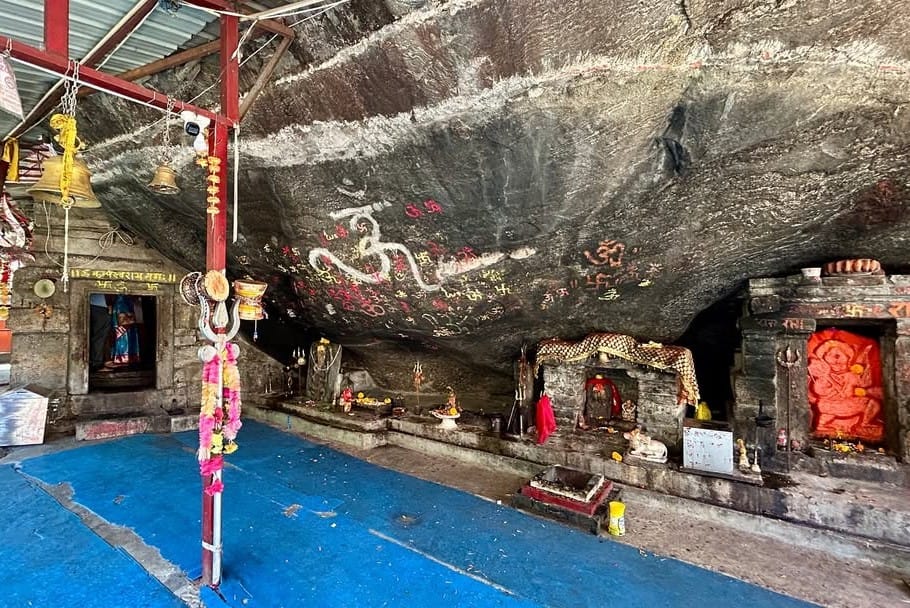
Unlike the dramatic stone architecture of Kedarnath or the meadow-surrounded solitude of Tungnath, Kalpeshwar is a more intimate destination. It sits inside a small cave, requiring you to bend as you enter, a quiet reminder that devotion begins with humility.
Location: The Hidden
Kalpeshwar is located in the Urgam Valley of Chamoli District.
To reach Kalpeshwar Mahadev Temple:
- Drive from Rishikesh to Helang (on the Badrinath highway).
- From Helang, take the road into Urgam Valley.
- A short trek (around 2–3 km) leads to the temple.
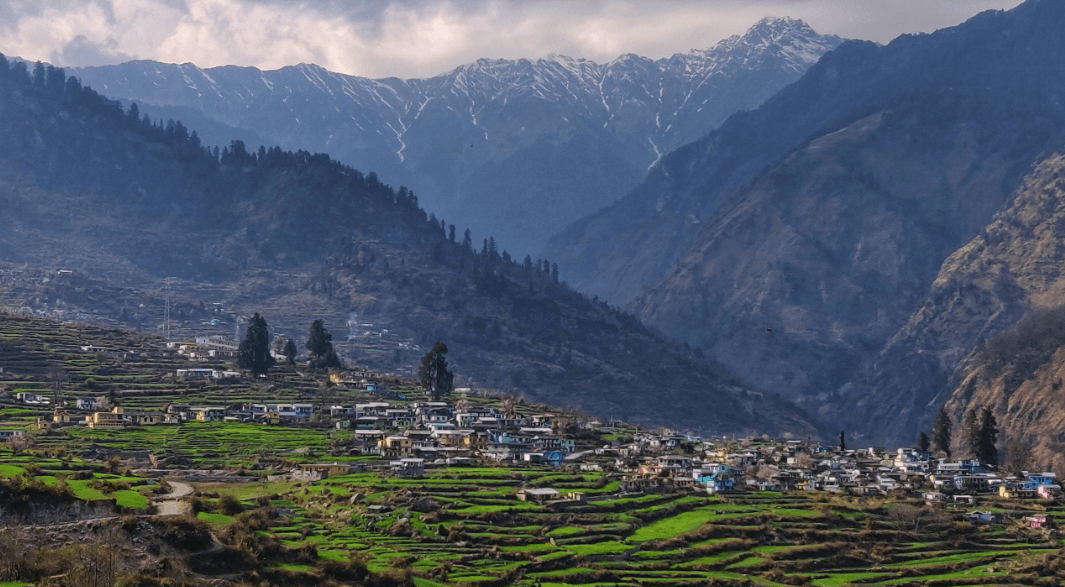
The path passes terraced fields, traditional Garhwali homes, and small streams that appear and disappear among rocks. There are no loudspeakers. No aggressive vendors. No rush.
Architecture and Spiritual Atmosphere
Kalpeshwar is not monumental. It is elemental. The shrine is housed inside a natural cave. A narrow entrance opens into a small sanctum where the rock formation representing Shiva’s Jata is worshipped. Oil lamps flicker against stone walls. The scent of incense stays low and grounded.
The Living Legend: Kalpavriksha
Just a short walk from the temple stands the ancient Kalpavriksha, a tree believed to be several centuries old. Legend says the sage Durvasa meditated beneath its branches. It serves as a living companion to the cave, where the temple is stone and shadow, the tree is light and growth.
The worship here is equally elemental. Because the Jata is part of the natural rock, the Abhishek (ritual bathing) is performed directly onto the earth itself. It is a rare sight that reminds the pilgrim that the divine is not housed within the mountain; the mountain is the divine.
Unlike Kedarnath Temple, which stands against towering glaciers at 3,583 metres, Kalpeshwar sits at a more accessible altitude of around 2,200 metres. This makes it the only Panch Kedar temple open during winter. If you’re exploring the larger Char Dham landscape, read our guide to the Char Dham Yatra in Uttarakhand.
Why Kalpeshwar Mahadev Feels Different
In the hierarchy of pilgrimage, Kalpeshwar often comes last. Many travellers visit Kedarnath but skip the full Panch Kedar journey. But spiritually, Kalpeshwar feels like a conclusion. It is the quiet after the intensity. The exhale after effort.
Where Kedarnath tests the body, Kalpeshwar settles the mind. Kalpeshwar is not about ticking a temple off a list. It is about understanding how geography shapes devotion. High-altitude shrines create awe. Valley shrines create intimacy.
Best Time to Visit Kalpeshwar Mahadev Temple
- March to June: Pleasant weather, ideal for trekking.
- September to November: Clear skies, post-monsoon freshness.
- Winter (December–February): Accessible, though roads may occasionally be affected by snowfall.
Since the temple remains open year-round, it offers a rare winter pilgrimage opportunity when other Panch Kedar shrines are closed.
Travel Tips for Traveller
- Stay in local guesthouses in the Urgam Valley for a more immersive experience.
- Carry light woollens even in summer.
- Respect the cave structure, space inside is limited.
- Combine your visit with nearby villages rather than rushing back to the highway.
- For those building a Panch Kedar itinerary, Kalpeshwar can be comfortably paired after visiting Rudranath or Madhyamaheshwar.
Kalpeshwar Mahadev Temple FAQs
Q1. Is Kalpeshwar Temple open throughout the year?
Yes. It is the only Panch Kedar temple open in all seasons.
Q2. How long is the trek to Kalpeshwar?
Approximately 2–3 km from Urgam village, relatively easy compared to other Panch Kedar treks.
Q3. What form of Lord Shiva is worshipped here?
Lord Shiva is worshipped in the form of Jata (matted hair).
Q4. Is Kalpeshwar part of Char Dham?
No, it is part of the Panch Kedar circuit, not the Char Dham Yatra.

NativeSteps
We believe the best stories are found off the beaten path and under an open sky. NativeSteps is dedicated to mindful exploration, helping you navigate the world with a lighter footprint and a deeper connection to the places you visit. Every step is an opportunity to honour the earth and the cultures that call it home.