
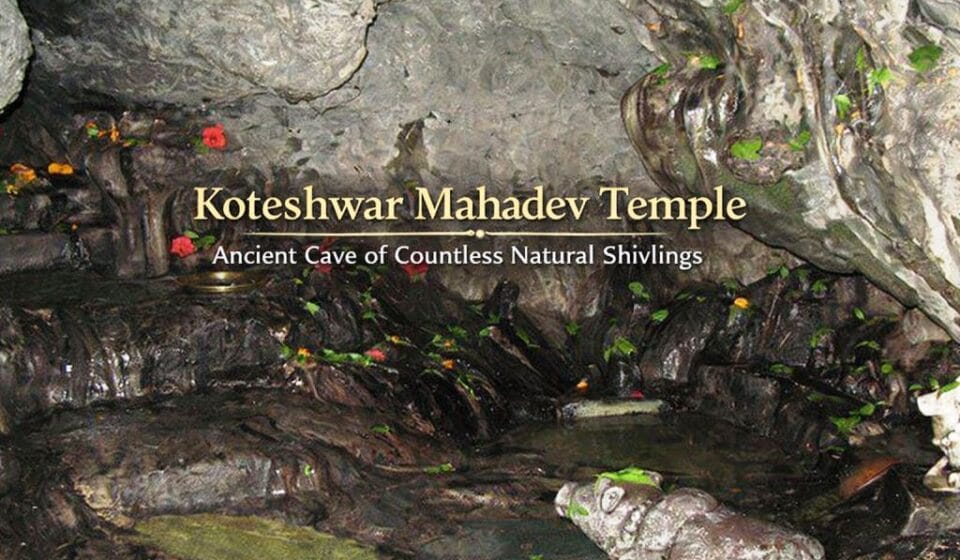

Tucked along the banks of the Alaknanda River, just a few kilometres from the confluence town of Rudraprayag, Koteshwar Mahadev Temple is not a towering Himalayan shrine or a grand stone mandir. It is quieter. Older. More elemental.
Carved not by chisels but by time itself, this sacred cave temple holds hundreds of naturally formed shivlings within its dark interior, a place where rock, river, and reverence meet.
For travellers exploring the spiritual geography of Uttarakhand, especially those journeying toward Kedarnath, Koteshwar is not just a stopover. It is a pause.
Where Is Koteshwar Mahadev Temple?
Koteshwar Mahadev Temple is located about 3 km from Rudraprayag town in Uttarakhand, along the Badrinath Highway. The temple sits on the right bank of the Alaknanda River, surrounded by cliffs and dense greenery.
- Nearest town: Rudraprayag
- Nearest major pilgrimage: Kedarnath (en route via Guptkashi)
- Altitude: Approx. 600–700 meters
- Best time to visit: October to March for calm weather; monsoon offers dramatic river views, but with caution
Its accessibility makes it an easy yet meaningful detour for Char Dham pilgrims and cultural travellers alike.
The Legend of Koteshwar: A Thousand Forms of Shiva
The name Koteshwar comes from the Sanskrit word “Koti”, meaning crore (ten million), symbolising the countless manifestations of Lord Shiva.
According to local tradition:
- After defeating the demon Bhasmasura, Lord Shiva is believed to have meditated in this cave.
- During his meditation, countless Shivlings manifested naturally from the cave walls.
- These formations represent Shiva’s infinite forms, subtle, formless, and eternal.
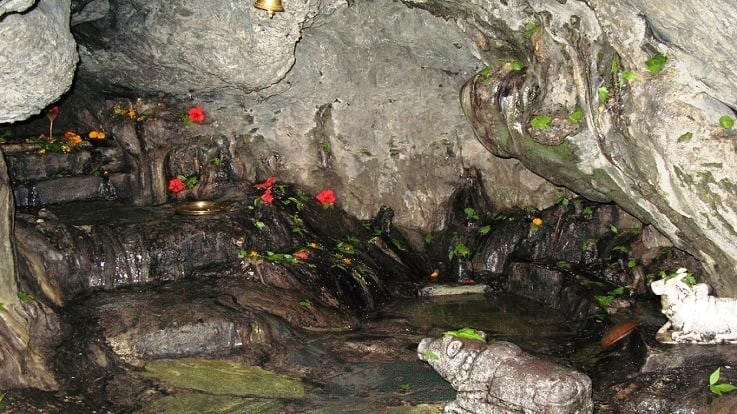
Inside the cave, you will see hundreds of naturally occurring stone formations, shaped by centuries of mineral deposits and water flow. Devotees believe these are self-manifested (Swayambhu) Shivlings.
Unlike constructed temples, Koteshwar feels primordial, as if faith here preceded architecture.
Inside the Cave: A Living Geological Shrine
Entering the temple involves descending a short staircase carved into the rock. The cave narrows gradually, guiding you into a dimly lit sanctum where the main shivling stands.
The atmosphere inside is distinct:
- Cool and damp stone walls
- Soft chants echoing in an enclosed space
- Oil lamps flickering against rock formations
- The sound of the Alaknanda flowing outside
The cave is not vast, but it is layered, each corner holding smaller shivlings of different shapes and sizes. Some resemble miniature pillars; others appear embedded in the wall.
Spiritual Significance in the Panch Prayag Region
Rudraprayag is one of the sacred Panch Prayag, the five confluences of the Alaknanda River. Here, the Mandakini River meets the Alaknanda, forming a spiritually powerful confluence.
While pilgrims primarily visit Rudraprayag for its confluence and onward journey to Kedarnath, Koteshwar Mahadev Temple adds another dimension:
- It represents Shiva in his meditative, cave-dwelling form
- It connects river worship with cave spirituality
- It anchors Rudraprayag not just as a transit town, but as a sacred destination
The temple is often visited before proceeding toward Kedarnath, symbolically seeking blessings from Shiva’s quieter form before approaching his grand Himalayan abode.
Koteshwar and Kedarnath: A Subtle Connection
For many pilgrims heading to Kedarnath Temple, Koteshwar serves as a preparatory stop. Where Kedarnath stands at 3,583 meters amid snow-clad peaks, Koteshwar rests humbly by a flowing river. One is monumental; the other is elemental. But both speak of the same presence.
Visiting Koteshwar before Kedarnath offers:
- A gentler introduction to Shiva worship
- An accessible darshan for elderly pilgrims
- A quieter spiritual experience away from large crowds
It reminds travellers that devotion in Uttarakhand exists at many altitudes.
Best Time to Visit Koteshwar Mahadev Temple
Koteshwar can be visited throughout the year, but the experience changes with the seasons:
October to March (Ideal)
- Clear skies
- Calm river flow
- Comfortable weather
April to June
- Pleasant temperature
- Increased pilgrim movement due to the Char Dham season
Monsoon (July to September)
- Lush greenery
- Dramatic river flow
- Occasional travel disruptions due to rainfall
Winter visits feel especially contemplative, as tourist traffic reduces and the cave retains a serene stillness.
Temple Timings & Entry Details
- Opening hours: Approximately 6:00 AM to 8:00 PM
- Entry fee: No entry fee
- Photography: Allowed outside; limited inside the cave
- Aarti timings: Morning and evening rituals are observed daily
As always in sacred spaces, modest attire and quiet conduct are expected.
Architecture: When Nature Becomes Temple
Koteshwar Mahadev Temple does not follow traditional North Indian temple architecture.
There is:
- No towering shikhara
- No elaborate carvings
- No expansive courtyard
Instead, the cave itself is the sanctum.
The rock ceiling curves overhead, moisture collects along the walls, and mineral formations rise from the ground. This is architecture shaped by geology.
The small temple structure outside the cave marks the entrance, but the real sanctity lies within the stone.
How to Reach Koteshwar Mahadev Temple
By Road
Rudraprayag is well-connected by road from:
- Rishikesh (approx. 140 km)
- Haridwar (approx. 165 km)
- Dehradun (approx. 180 km)
From Rudraprayag town, Koteshwar is a short drive or taxi ride.
By Rail
- Nearest railway station: Rishikesh (limited connectivity)
Major railhead: Haridwar
By Air
- Nearest airport: Jolly Grant Airport, Dehradun
The final stretch involves descending steps to the cave.
Why Koteshwar Mahadev Matters for Travelers
Koteshwar represents something essential:
- A temple not built for spectacle
- A shrine shaped by landscape
- A reminder that sacred geography in India is inseparable from natural terrain
It invites slow observation. Sit by the river. Listen to water against stone. Notice how the cave absorbs sound. In an era where many pilgrimages are rushed, Koteshwar encourages stillness.
Nearby Places to Explore
While visiting Koteshwar, travellers can also explore:
- Rudraprayag Sangam (Mandakini–Alaknanda confluence)
- Augustmuni town
- Guptkashi (on the way to Kedarnath)
- Ukhimath (winter seat of the Kedarnath deity)
Each adds depth to the Rudraprayag region’s spiritual landscape.
Travel Tips
- Wear comfortable footwear (steps may be damp).
- Avoid visiting during heavy rainfall.
- Combine a visit to the Rudraprayag Sangam for a fuller experience.
- Early morning visits offer peaceful darshan.
A Cave That Whispers
Koteshwar Mahadev Temple does not overwhelm. It does not dominate the skyline. It waits quietly by the river, holding centuries of mineral memory and myth.
In the dim cave, where countless shivlings rise from stone, the idea of infinity feels tangible. If Kedarnath is the mountain’s declaration of faith, Koteshwar is its whisper. And sometimes, whispers stay longer than echoes.