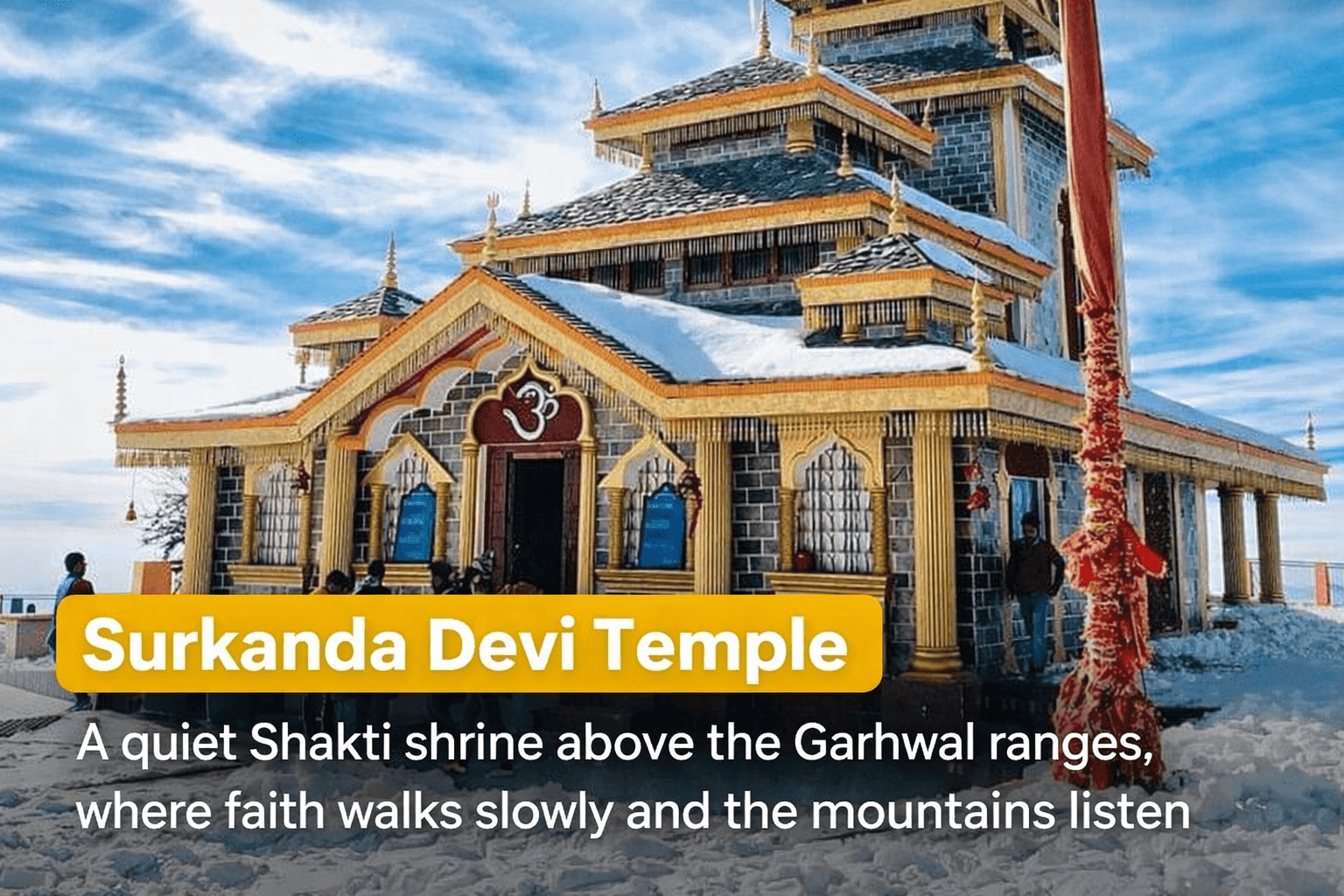

Some temples announce themselves with crowds, noise, and a sense of urgency. Surkanda Devi does not. It waits above the forests, beyond the towns, wrapped in wind and silence.
Perched at around 2,750 meters on a wooded ridge near Dhanaulti, Surkanda Devi Temple is one of Uttarakhand’s 51 Shakti Peeths, believed to mark the spot where the head of Goddess Sati fell. Yet what lingers most strongly here is not mythology alone, but atmosphere: a feeling that time loosens its grip the higher you climb.
Furthermore, the temple is situated at such a high altitude that Kedarnath Dham, Badrinath, Gaurishankar, Neelkanth, and the Chaukhamba peaks are visible from this location. This is a place reached on foot and understood only slowly.
The Approach: From Roads to Footsteps
The journey to Surkanda Devi gently peels away layers of modern life. From Dehradun, the road climbs through Mussoorie’s bends and onward toward quieter terrain. Mussoorie may draw the crowds, but beyond it, the hills begin to breathe more freely.
Near Dhanaulti, the road ends at Kaddukhal, a small settlement that feels like a threshold rather than a destination.
From here, a 2-kilometre stone path ascends through oak and rhododendron forest. The walk is not difficult, but it is deliberate. Bells echo from below. The air cools. The sounds of traffic dissolve into wind and birdsong. Pilgrims, elderly couples, families, and lone walkers move at their own pace, united by the quiet rhythm of ascent.
This walk is not a formality. It is the beginning of the prayer.
The Temple Above the Trees
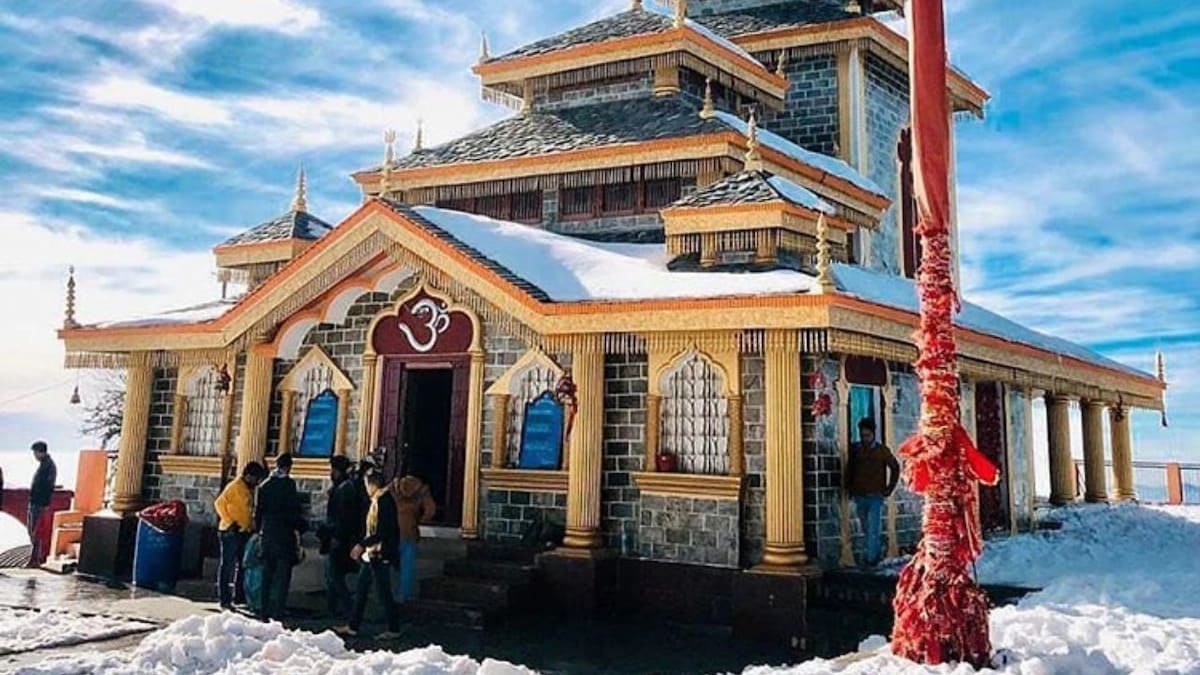
The temple itself is simple with whitewashed walls. Red flags lifting and falling with the breeze. A small sanctum holding immense belief. There is no grandeur here, only presence.
Step into the courtyard and the Garhwal Himalaya open up around you. On clear days, distant snow peaks appear like pale outlines on the horizon. On others, mist drifts in and out, briefly revealing and concealing the world below. Either way, the setting encourages pause.
People sit without speaking. Some close their eyes. Others simply look. Surkanda Devi does not demand devotion. It allows it.
Myth, Memory, and Meaning
According to Hindu tradition, when Goddess Sati’s body was carried across the cosmos by Lord Shiva, her head fell here, sanctifying the hilltop as a Shakti Peeth. Over centuries, this belief has woven itself into local life, into festivals, pilgrimages, and quiet daily prayers. This temple is also described in detail in the Skanda Purana.
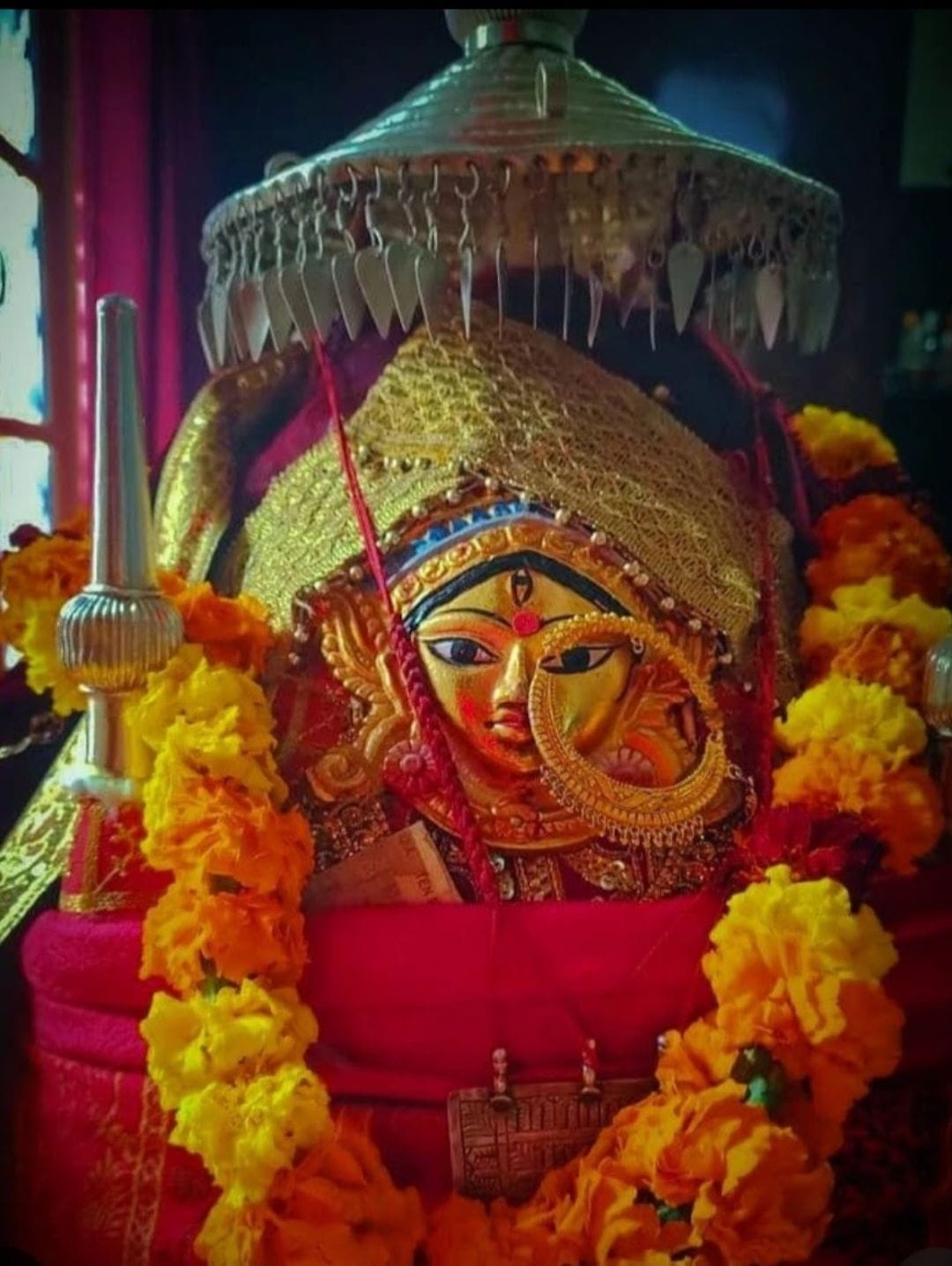
According to another story associated with this temple, when the demons had conquered heaven, Lord Indra, along with other gods, worshipped at this temple. After worshipping the goddess, the gods regained control of heaven. According to religious beliefs, those who visit this temple receive happiness and prosperity, and all their sins and sufferings are removed.
During Navratri, the stillness gives way to colour and movement. Thousands climb the path, chanting and celebrating the feminine divine. Yet outside these days, Surkanda Devi returns to its natural state: restrained, contemplative, almost austere.
Seasons at Surkanda Devi
- Spring (April–June): Forests bloom, skies stay mostly clear, and the walk feels gentle and welcoming.
- Monsoon (July–August): Mist rolls in thick layers. The temple feels suspended in a cloud, though rain can make the path slippery.
- Autumn (September–November): Crisp air, long views, and golden light, arguably the most rewarding time to visit.
- Winter (December–February): Snow transforms the trail into a quiet white corridor. Access depends on conditions, but those who arrive find rare silence.
Each season reshapes the experience without changing the soul of the place.
How to Reach Surkanda Devi Temple
Surkanda Devi fits naturally into a Dehradun–Mussoorie–Dhanaulti circuit, offering a spiritual pause amid scenic travel rather than a detour.
- Base point: Kaddukhal (near Dhanaulti)
- Nearest major city: Dehradun
- Road route: Dehradun → Mussoorie → Dhanaulti → Kaddukhal
- Trek: 2 km stone path (easy to moderate)
Why Surkanda Devi Stays With You
Many travellers visit Surkanda Devi quickly, an hour, a photograph, a return. But the temple reveals itself only to those who linger.
Sit longer than planned. Let the wind pass through the prayer flags. Watch the shadows move across the valley.
Somewhere between the climb and the descent, something slows inside you. That is the real offering Surkanda Devi makes, not spectacle, not certainty, but stillness. And in the mountains, stillness is sacred.